2025 Gig Economy Regulations: E-commerce Impact

The 2025 gig economy regulations will profoundly impact e-commerce platforms utilizing independent contractors by redefining worker classifications, imposing new compliance burdens, and necessitating significant financial and operational adjustments across the industry.
The digital marketplace thrives on flexibility, with countless e-commerce platforms leveraging the power of independent contractors to drive their operations, from delivery and logistics to specialized design and customer support. However, the landscape is shifting dramatically. As we approach 2025, new legislative frameworks are emerging that promise to redefine the very nature of this relationship. Understanding what the 2025 gig economy regulations mean for e-commerce platforms utilizing independent contractors is no longer just a legal curiosity; it’s an urgent business imperative.
These impending changes carry significant implications for operational models, financial planning, and the fundamental structure of how online businesses interact with their workforce. Ignoring them could lead to substantial penalties and competitive disadvantages.
Understanding the Core of the 2025 Gig Economy Regulations
The heart of the 2025 gig economy regulations lies in a concerted effort to provide greater protections and benefits to workers who have historically operated in ambiguous employment categories. This often involves re-evaluating the criteria that distinguish an independent contractor from an employee. Policymakers argue that many gig workers, despite their classification, exhibit characteristics more akin to traditional employees, thus deserving similar rights and safeguards.
This reclassification push is not uniform across all states or even at the federal level, leading to a complex patchwork of rules that e-commerce platforms must navigate. The goal is often to ensure fair wages, access to benefits like health insurance and retirement plans, and protections under labor laws that independent contractors typically do not receive.
The Shifting Definition of an Independent Contractor
The traditional tests for independent contractor status, such as the common law test or the economic realities test, are being reinterpreted or supplemented by new, more stringent criteria. These updated definitions often place a greater emphasis on the degree of control an e-commerce platform exerts over its workers and the worker’s economic dependence on that platform.
For instance, some regulations may scrutinize whether a contractor is truly free from the company’s direction and control in performing their work, or if their services are integral to the company’s core business. The more control a platform has, or the more essential the worker is to the platform’s primary function, the higher the likelihood of reclassification.
- Control over Work: Platforms must assess how much direction they provide regarding tasks, schedules, and methods.
- Economic Dependence: The extent to which a contractor relies solely on one platform for income is a key factor.
- Nature of Services: Are the services provided central to the platform’s main business model?
- Opportunity for Profit/Loss: Does the contractor truly have the ability to incur profit or loss, indicative of an independent business?
These evolving definitions compel e-commerce platforms to meticulously review their relationships with all independent contractors. A misstep in classification can lead to significant legal and financial repercussions, making proactive compliance an absolute necessity. The implications extend beyond just legal definitions, touching upon operational strategies and competitive positioning within the digital marketplace.
Direct Impact on E-commerce Platform Operations
The operational consequences of the 2025 gig economy regulations for e-commerce platforms are far-reaching, demanding a comprehensive re-evaluation of existing business models. Platforms that heavily rely on a flexible, on-demand workforce for tasks like last-mile delivery, customer service, content moderation, or product photography will feel the most immediate effects. These changes are not merely administrative; they will necessitate fundamental shifts in how work is organized and managed.
The transition from engaging independent contractors to potentially employing a significant portion of their workforce introduces complexities around scheduling, training, performance management, and even the technological infrastructure required to support a larger employee base. Platforms will need to invest in new systems and processes to handle employee benefits, payroll taxes, and compliance with various labor laws.
Operational Adjustments and Compliance Challenges
Platforms will face the intricate task of adapting their operational workflows to align with new employment standards. This could involve standardizing tasks that were once handled flexibly by contractors, implementing stricter oversight, and developing more robust internal HR functions. The shift from a transaction-based relationship to an employment-based one requires a different management philosophy and a greater commitment of resources.
Compliance challenges will span multiple domains, including wage and hour laws, anti-discrimination statutes, and workplace safety regulations. Each state may also have its own nuances, creating a complex compliance landscape for platforms operating nationwide. The administrative burden alone could be substantial, requiring dedicated legal and HR teams.
- Workforce Reclassification: Identifying which contractors meet new employee criteria.
- HR Infrastructure: Building or expanding HR departments to manage employees.
- Scheduling and Management: Developing systems for employee shifts, breaks, and performance.
- Training and Development: Investing in employee training programs and career paths.
The need for robust data collection and reporting will also increase. Platforms will be required to maintain detailed records of employee hours, wages, benefits, and other employment-related data to demonstrate compliance during audits. This level of scrutiny marks a significant departure from the looser oversight typically associated with independent contractor relationships, compelling platforms to professionalize their workforce management practices.
Financial Implications for E-commerce Businesses
The financial repercussions of the 2025 gig economy regulations are arguably the most significant concern for e-commerce platforms. Shifting independent contractors to employee status brings with it a cascade of new costs that were previously externalized. These expenses can profoundly impact profit margins, pricing strategies, and overall business viability, especially for smaller or emerging platforms.
The direct costs associated with employment include mandatory contributions to social security, Medicare, unemployment insurance, and workers’ compensation. Beyond these statutory requirements, platforms will likely need to offer benefits such as health insurance, paid time off, and potentially retirement plans to attract and retain talent, further escalating expenses. These new financial burdens are not minor adjustments; they represent a fundamental change in the cost structure of doing business.
Increased Labor Costs and Benefit Provisions
The most immediate financial hit will come from increased labor costs. Employees are entitled to minimum wage and overtime pay, which can significantly raise payroll expenses compared to paying contractors per task or project. Furthermore, providing mandated employee benefits adds another substantial layer of cost. For example, a comprehensive health insurance plan for a single employee can run into thousands of dollars annually, a cost many platforms have historically avoided.
The cumulative effect of these expenses could force platforms to reconsider their pricing models, potentially leading to higher service fees for customers or reduced earnings for workers, which could in turn impact demand and workforce availability. The balancing act between compliance, profitability, and market competitiveness will become increasingly delicate.
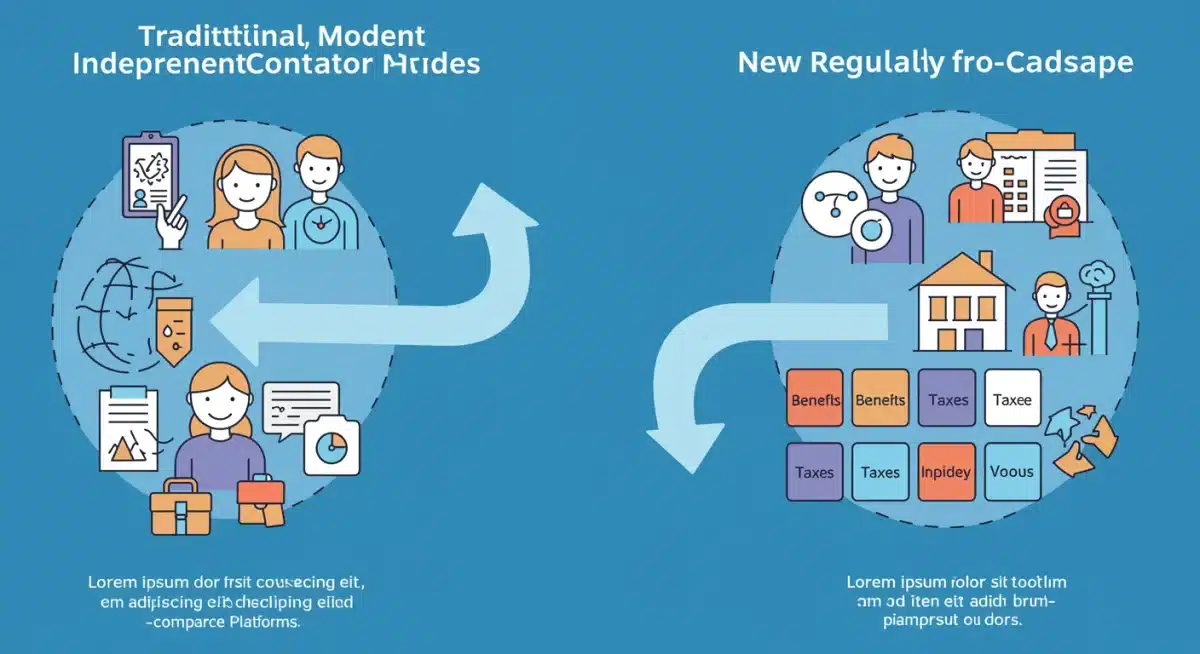
- Payroll Taxes: Employer contributions to FICA, FUTA, and state unemployment.
- Employee Benefits: Health insurance, paid sick leave, vacation time, retirement plans.
- Workers’ Compensation: Coverage for work-related injuries or illnesses.
- Overtime Pay: Compliance with federal and state overtime laws for non-exempt employees.
Beyond direct costs, there are indirect financial implications, such as increased administrative overhead for managing HR, compliance, and legal matters. The potential for litigation from misclassification claims also represents a significant financial risk. Platforms may need to allocate substantial budgets towards legal counsel and potential settlements, adding another layer of financial uncertainty to their operations.
Legal Challenges and Regulatory Scrutiny
The regulatory environment surrounding the gig economy is highly dynamic, characterized by ongoing legal challenges and increased scrutiny from governmental bodies. The 2025 regulations are not emerging in a vacuum; they are the result of years of advocacy, court battles, and legislative debates aimed at clarifying worker status in the digital age. E-commerce platforms must prepare for an era of heightened legal risk and more frequent regulatory oversight.
This scrutiny will come from various angles, including federal agencies like the Department of Labor, state labor boards, and even private litigation from workers seeking reclassification and back pay. The legal landscape is fragmented, with different states adopting varying approaches, creating a complex web of requirements that platforms must untangle.
Navigating a Complex Legal Landscape
Platforms operating across state lines will face the daunting task of complying with multiple, potentially conflicting, sets of regulations. What constitutes an independent contractor in one state may be an employee in another, forcing platforms to either tailor their workforce models on a state-by-state basis or adopt a more conservative, nationwide employment model.
The legal challenges are not limited to classification. New regulations may also touch upon data privacy, algorithmic management, and fair scheduling practices. Platforms will need to ensure their technology and internal policies are compliant with these emerging areas of law, adding another layer of complexity to their legal and operational frameworks.
- State-Specific Laws: Understanding and adhering to diverse state-level gig economy statutes.
- Federal Oversight: Monitoring potential federal interventions and guidelines on worker classification.
- Class Action Lawsuits: Preparing for increased risk of misclassification lawsuits.
- Compliance Audits: Expecting more frequent audits from labor authorities.
Platforms should proactively engage legal counsel specializing in labor law and gig economy regulations to conduct thorough audits of their current workforce classifications and operational practices. Developing robust internal compliance programs and clear communication strategies for workers will be crucial in mitigating legal risks and fostering trust. Ignoring these legal complexities could lead to costly penalties, reputational damage, and operational disruptions.
Adapting Business Models and Innovation
Faced with these new regulatory realities, e-commerce platforms are compelled to adapt their business models, fostering innovation in how they structure their workforce and deliver services. The goal is not merely to comply, but to thrive within the new framework, finding efficiencies and new opportunities that emerge from these changes. This might involve exploring hybrid models, investing in automation, or even rethinking the very services they offer.
Adaptation could mean a strategic shift towards retaining a core team of employees for critical functions, while still utilizing independent contractors for highly specialized or intermittent tasks that clearly meet the stricter criteria. It’s about finding the right balance between flexibility and compliance, leveraging technology to manage a more diverse workforce structure effectively.
Strategic Responses and Future Directions
Some platforms may choose to automate tasks previously performed by gig workers, especially those that are repetitive or easily standardized. This could involve greater investment in AI, robotics, and advanced software solutions to reduce reliance on human labor for certain aspects of their operations. While this presents its own set of challenges, it could offer a long-term solution to mitigate rising labor costs.
Another strategic response involves fostering genuine independence among contractors. This means ensuring contractors truly set their own rates, choose their own hours, and have the freedom to work for multiple platforms, thereby strengthening their independent status. Platforms might also explore co-operative models or other innovative structures that empower workers while maintaining compliance.
- Hybrid Workforce Models: Combining employees for core functions with truly independent contractors.
- Automation and AI Integration: Leveraging technology to reduce dependence on human labor for certain tasks.
- Enhanced Contractor Autonomy: Redesigning roles to ensure genuine independence and control for contractors.
- Platform Co-operatives: Exploring worker-owned or managed models.
Ultimately, the most successful e-commerce platforms will be those that view these regulations not just as hurdles, but as catalysts for innovation. By proactively adapting their business models, investing in technology, and fostering a more transparent and equitable relationship with their workforce, they can maintain their competitive edge and continue to grow in the evolving digital economy. This period demands strategic foresight and a willingness to embrace change, transforming challenges into opportunities for sustainable growth.
The Worker’s Perspective: Opportunities and Challenges
While the primary focus for platforms is often on compliance and cost, the 2025 gig economy regulations fundamentally aim to improve the working conditions and security of independent contractors. From the worker’s perspective, these changes present both significant opportunities for enhanced benefits and protections, as well as potential challenges related to flexibility and access to work. Understanding this dual impact is crucial for platforms seeking to navigate the new landscape effectively.
Many gig workers have long sought greater stability, access to healthcare, and retirement savings, which traditional employment status can provide. For those who are reclassified as employees, these regulations could represent a substantial improvement in their financial and personal well-being, offering a safety net previously unavailable in the gig economy.
Balancing Benefits with Flexibility
The most apparent opportunity for reclassified workers is the potential for improved economic security. Employees typically receive a guaranteed minimum wage, protection against wrongful termination, and access to unemployment benefits if their work ceases. Moreover, the provision of health insurance and contributions to retirement plans can alleviate significant financial burdens and provide long-term stability.
However, this increased security may come at the cost of the very flexibility that attracted many to gig work in the first place. Employment status often entails fixed schedules, stricter oversight, and less autonomy over how and when work is performed. For some, the trade-off may not be desirable, preferring the freedom of independent contracting over the structure of employment.
- Enhanced Benefits: Access to health insurance, paid time off, and retirement plans.
- Labor Protections: Minimum wage, overtime, and anti-discrimination safeguards.
- Potential Loss of Flexibility: More rigid schedules and less autonomy over work.
- Reduced Work Opportunities: Platforms might scale back contractors due to increased costs.
Another challenge for workers could be a reduction in available gig opportunities. If platforms face significantly higher costs from reclassifying workers, they may reduce their overall reliance on human labor, opting for automation or streamlining operations. This could lead to fewer available roles for both employees and remaining independent contractors, impacting earning potential across the gig workforce. The regulations, while well-intentioned, could inadvertently reshape the job market for gig workers, necessitating new skill development and adaptation on their part.
Preparing for the Future: Best Practices for E-commerce Platforms
As the 2025 gig economy regulations loom, e-commerce platforms must adopt a proactive and strategic approach to ensure compliance, mitigate risks, and maintain operational efficiency. This requires more than just a superficial review; it demands a deep dive into current practices, a willingness to adapt, and a commitment to transparent communication with all stakeholders. Ignoring these impending changes is not an option; thoughtful preparation is key to navigating the future successfully.
The best practices involve a multi-faceted strategy encompassing legal review, operational restructuring, financial planning, and clear communication. Platforms that prioritize these areas will be better positioned to absorb the impact of the regulations and emerge stronger, potentially even gaining a competitive advantage through enhanced worker relations and streamlined processes.
Strategic Compliance and Workforce Management
A critical first step is to conduct a thorough legal audit of all existing independent contractor relationships. This audit should assess each role against the specific criteria outlined in the new 2025 regulations, identifying potential areas of misclassification risk. Based on this assessment, platforms should develop a clear strategy for reclassification or for strengthening the independent contractor status of their remaining gig workers.
Investing in robust human resources and legal expertise is paramount. This includes hiring or consulting with specialists who understand the nuances of labor law and the gig economy. Platforms will also need to develop comprehensive training programs for their management teams to ensure consistent application of new policies and compliance with labor laws.
- Legal Audit: Review all contractor agreements against new regulatory criteria.
- Scenario Planning: Develop strategies for reclassification and cost management.
- Communication Strategy: Transparently inform contractors about potential changes.
- Technology Investment: Utilize HRIS and payroll systems designed for compliance.
- Advocacy and Engagement: Participate in industry discussions to shape future policies.
Furthermore, platforms should engage in scenario planning to understand the financial implications of various compliance strategies. This involves modeling different cost structures based on potential reclassification rates and adjusting pricing or operational expenditures accordingly. Maintaining open and honest communication with independent contractors throughout this transition is also vital to preserve trust and minimize disruption. By embracing these best practices, e-commerce platforms can transform regulatory challenges into opportunities for sustainable growth and a more equitable future for all participants in the gig economy.
| Key Impact Area | Brief Description of Change |
|---|---|
| Worker Classification | Stricter criteria for independent contractor status, potentially leading to reclassification as employees. |
| Operational Changes | Need for new HR systems, management practices, and standardized workflows for reclassified workers. |
| Financial Costs | Increased expenses from payroll taxes, benefits, minimum wage, and potential litigation. |
| Legal & Compliance | Navigating complex state and federal laws, increased regulatory scrutiny, and risk of lawsuits. |
Frequently Asked Questions About 2025 Gig Economy Regulations
The main goal is to enhance worker protections and benefits for individuals currently classified as independent contractors by potentially reclassifying them as employees. This aims to provide access to minimum wage, overtime, unemployment insurance, and other employment-related benefits, addressing historical ambiguities in worker status.
E-commerce platforms face increased labor costs due to payroll taxes, mandatory benefits like health insurance and paid time off, and adherence to minimum wage and overtime laws for reclassified workers. This will necessitate adjustments to business models and potentially service pricing, impacting overall profitability.
Yes, but under stricter conditions. Platforms must ensure their contractors genuinely meet the revised, more stringent criteria for independent status, emphasizing true autonomy and freedom from company control. Misclassification risks will be higher, requiring careful legal review and operational adjustments to maintain compliance.
Platforms should prepare for substantial changes including developing robust HR infrastructure, implementing new payroll systems, standardizing worker management, and potentially restructuring their workforce into hybrid models. This also involves increased administrative burdens for compliance and record-keeping across various labor laws.
Platforms should conduct thorough legal audits of their workforce, engage with labor law specialists, develop comprehensive compliance strategies, and foster transparent communication with their contractors. Scenario planning for financial impacts and exploring technological solutions like automation are also crucial preparatory steps for adaptation.
Conclusion
The advent of the 2025 gig economy regulations marks a pivotal moment for e-commerce platforms heavily reliant on independent contractors. These regulations, driven by a desire to enhance worker protections, will usher in a new era of compliance challenges, significant financial adjustments, and fundamental shifts in operational models. Platforms must move beyond a reactive stance, embracing proactive legal audits, strategic workforce planning, and transparent communication to navigate this complex landscape. While the initial impact may present considerable hurdles, those platforms that innovate and adapt their business models thoughtfully will not only ensure compliance but also foster more sustainable and equitable relationships with their workforce, ultimately strengthening their position in the evolving digital economy.