Automated Checkout Systems: 30% Wait Time Reduction by 2025
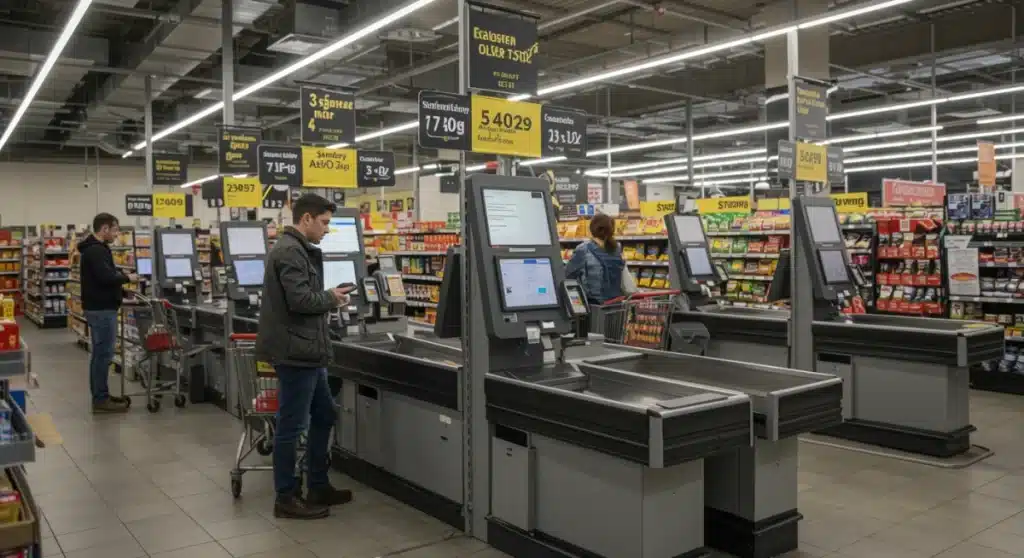
Automated checkout systems are revolutionizing retail, aiming to achieve a significant 30% reduction in customer wait times by mid-2025, fundamentally improving the shopping experience for consumers across various sectors.
The retail industry is in a constant state of evolution, driven by consumer demand for speed, convenience, and efficiency. One of the most significant advancements addressing these needs is the widespread adoption of automated checkout systems. These innovative technologies are not just a passing trend; they are becoming essential tools for retailers striving to enhance operational effectiveness and, crucially, to dramatically cut down customer wait times, with an ambitious target of a 30% reduction by mid-2025.
The rise of automated checkout technologies
Automated checkout technologies represent a paradigm shift in how consumers complete their purchases. No longer confined to traditional cashier lines, shoppers are increasingly encountering a variety of self-service options that promise a faster, more streamlined experience. This evolution is driven by both technological innovation and a growing consumer preference for autonomy.
These systems encompass a broad spectrum of solutions, from basic self-scanning kiosks to advanced, fully autonomous stores. The core objective remains consistent: to minimize friction points in the checkout process, thereby enhancing customer satisfaction and operational efficiency for retailers. Understanding the different types and their applications is key to appreciating their impact.
Diverse types of automated checkout
The landscape of automated checkout is rich and varied, offering tailored solutions for different retail environments. Each system brings unique advantages, catering to specific customer needs and store formats.
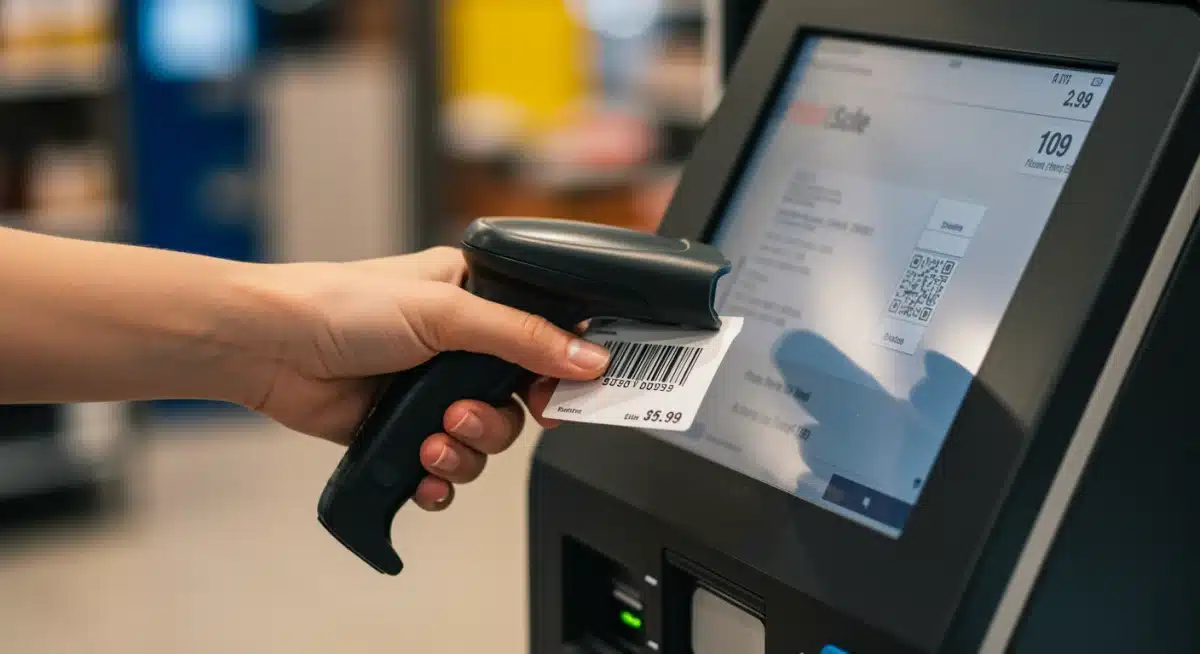
- Self-checkout kiosks: These are perhaps the most common, allowing customers to scan and pay for items themselves. They are prevalent in grocery stores and big-box retailers.
- Scan-and-go apps: Shoppers use their smartphones to scan items as they shop, then pay directly through the app, bypassing traditional checkout lines entirely.
- Cashierless stores: Utilizing advanced AI, computer vision, and sensor fusion, these stores automatically detect what customers take from shelves and charge their accounts upon exit, offering the ultimate frictionless experience.
- Smart carts: Equipped with built-in scanners and payment terminals, these carts allow customers to scan items as they add them, providing a running total and enabling payment directly from the cart.
The strategic implementation of these diverse technologies is crucial for retailers aiming to meet the 30% wait time reduction goal. By offering choices, stores can cater to different comfort levels and shopping habits, ensuring a broader appeal and faster throughput.
Driving forces behind the 30% wait time reduction target
The ambitious goal of reducing customer wait times by 30% by mid-2025 isn’t arbitrary; it’s a direct response to several critical market dynamics and technological advancements. Retailers are acutely aware that long queues are a primary source of customer dissatisfaction and lost sales, making efficiency a top priority.
Consumer expectations have shifted dramatically. In an era of instant gratification, waiting in line is increasingly viewed as an unnecessary inconvenience. Furthermore, the operational benefits for retailers, including reduced labor costs and optimized store layouts, provide compelling incentives for investing in automation.
Key factors accelerating adoption
Several convergent factors are propelling the rapid integration of automated checkout solutions. These elements create a fertile ground for innovation and widespread deployment across the retail sector.
- Technological maturity: Advances in AI, computer vision, and IoT have made these systems more reliable, accurate, and cost-effective.
- Changing consumer behavior: Shoppers are more comfortable with self-service options and expect convenience as a standard feature of their retail experience.
- Labor challenges: The ongoing scarcity of retail labor and rising wages make automated solutions an attractive alternative for managing operational costs.
- Data insights: Automated systems generate valuable data on shopping patterns, inventory, and customer preferences, enabling better decision-making.
These driving forces collectively underscore why the 30% wait time reduction is not just a wish, but a tangible, achievable objective for the retail industry. The convergence of consumer demand, technological readiness, and economic pressures creates a powerful impetus for change.
Technological innovations powering faster checkouts
The journey towards significantly reduced wait times is underpinned by continuous innovation in several key technological areas. These advancements are making automated checkout systems smarter, more reliable, and capable of handling a wider range of scenarios, from complex transactions to diverse product types.
At the heart of these systems lies sophisticated software and hardware designed to seamlessly identify products, process payments, and manage inventory. The integration of artificial intelligence and machine learning is particularly transformative, allowing systems to learn and adapt, further refining the checkout experience.
Core technologies and their impact
The effectiveness of automated checkout systems hinges on the seamless integration and performance of several cutting-edge technologies. Each component plays a vital role in accelerating the transaction process.
- Computer vision: Enables systems to ‘see’ and identify products without manual scanning, crucial for cashierless stores and smart carts.
- Sensor fusion: Combines data from various sensors (weight, motion, RFID) to accurately track items and prevent errors.
- AI and machine learning: Powers predictive analytics for inventory management, fraud detection, and personalized customer interactions, streamlining operations.
- Secure payment gateways: Ensures fast, secure, and diverse payment options, from contactless cards to mobile wallets.
These technological pillars are not only making checkouts faster but also more secure and user-friendly. The continuous improvement and integration of these innovations are what make the 30% wait time reduction target a realistic and achievable goal for retailers worldwide.
Benefits beyond reduced wait times
While the primary aim of automating checkout processes is to slash customer wait times, the ripple effects extend far beyond this immediate benefit. Retailers adopting these systems are discovering a multitude of advantages that contribute to overall business health, customer loyalty, and operational excellence.
These benefits touch upon various aspects of retail operations, from enhancing the shopper experience to optimizing resource allocation and gaining deeper insights into business performance. The strategic investment in automation yields a comprehensive return that strengthens a retailer’s competitive position.
Holistic advantages for retailers and consumers
The implementation of automated checkout systems creates a win-win scenario for both retailers and their customer base, fostering an environment of efficiency and satisfaction.
- Improved customer satisfaction: Faster transactions lead to happier customers, who are more likely to return and recommend the store.
- Increased operational efficiency: Staff can be redeployed to higher-value tasks, such as assisting customers or managing inventory, rather than solely focusing on checkout.
- Reduced labor costs: Automation can significantly lower the need for extensive cashier staffing, leading to substantial savings.
- Enhanced data collection: Systems provide rich data on purchasing habits, peak shopping times, and product popularity, informing strategic decisions.
- Minimized errors and fraud: Advanced systems can detect discrepancies and reduce instances of human error or theft.
These multifaceted benefits underscore why automated checkout systems are not merely a solution for queues but a strategic imperative for modern retail. The impact on profitability, customer perception, and operational agility is profound, driving the industry towards a more innovative future.
Challenges and considerations for widespread adoption
Despite the undeniable advantages and the clear trajectory towards increased automation, the path to widespread adoption of automated checkout systems is not without its hurdles. Retailers must navigate various challenges, ranging from technological integration complexities to consumer acceptance and security concerns.
Addressing these considerations proactively is crucial for successful implementation and for achieving the ambitious goal of a 30% reduction in wait times. A thoughtful approach that anticipates potential roadblocks will ensure a smoother transition and greater long-term success.
Navigating the complexities of implementation
Implementing automated checkout solutions requires careful planning and execution, as several critical factors can influence their effectiveness and acceptance.
- Initial investment costs: The upfront capital required for sophisticated systems can be significant, posing a barrier for smaller retailers.
- Technical integration: Seamlessly integrating new systems with existing POS, inventory, and security infrastructure can be complex.
- Customer education and acceptance: Some customers may be resistant to new technologies or require assistance, necessitating clear guidance and support.
- Security and privacy concerns: Ensuring the security of payment data and addressing privacy concerns related to customer tracking are paramount.
- Maintenance and support: Automated systems require ongoing technical maintenance and support to ensure smooth operation.
Overcoming these challenges requires a strategic vision, adequate resources, and a commitment to customer-centric design. By addressing these considerations head-on, retailers can pave the way for a more efficient and satisfying checkout experience for everyone.
The future outlook: achieving the 30% reduction by mid-2025
The retail sector is on the cusp of a significant transformation, with automated checkout systems leading the charge towards a future where long queues are a relic of the past. The goal of achieving a 30% reduction in customer wait times by mid-2025 is not merely aspirational; it is a tangible objective supported by technological advancements and strategic investments.
As retailers continue to refine their approach to automation, we can expect to see an even greater integration of AI, personalization, and seamless payment options. This evolution will not only redefine the checkout experience but also fundamentally alter the dynamics of retail operations, making them more agile and responsive to consumer needs.
Key trends shaping the automated checkout landscape
The trajectory of automated checkout systems is defined by several emerging trends that promise to further enhance efficiency and user experience.
- Increased personalization: Systems will offer more tailored experiences, remembering preferences and streamlining repeat purchases.
- Seamless integration with loyalty programs: Automated checkouts will effortlessly link to customer loyalty accounts, applying discounts and rewards automatically.
- Enhanced fraud detection: AI-powered analytics will become even more sophisticated at identifying and preventing fraudulent activities.
- Hybrid models: A mix of automated and traditional checkout options will become standard, offering maximum flexibility to customers.
- Edge computing: Processing data closer to the source will enable even faster transaction times and reduce reliance on cloud infrastructure.
The journey towards a 30% reduction in wait times is an exciting one, marked by innovation and a clear focus on the customer. By embracing these trends and continuously adapting, retailers are well-positioned to meet and even exceed this ambitious target, ushering in a new era of retail efficiency and customer satisfaction.
| Key Aspect | Brief Description |
|---|---|
| Wait Time Reduction Goal | Targeting a 30% decrease in customer wait times by mid-2025 through automated systems. |
| Key Technologies | Computer vision, AI, sensor fusion, and secure payment gateways drive efficiency. |
| Benefits for Retailers | Improved efficiency, reduced labor costs, valuable data insights, and enhanced fraud detection. |
| Challenges | High initial costs, technical integration, customer acceptance, and data security. |
Frequently asked questions about automated checkout systems
Automated checkout systems are retail technologies that allow customers to complete their purchases without direct intervention from a cashier. This includes self-checkout kiosks, scan-and-go apps, and fully cashierless stores, all designed to streamline the payment process and reduce waiting times.
They achieve this by offloading transactions from traditional cashiers, increasing the number of available checkout points, and speeding up the scanning and payment process through advanced technologies like computer vision and AI. This parallel processing significantly boosts throughput.
Yes, modern automated checkout systems incorporate robust security measures, including encrypted payment processing, fraud detection algorithms, and surveillance. Retailers prioritize data security and customer privacy, continuously updating systems to meet industry standards and regulations.
Beyond reduced wait times, retailers benefit from increased operational efficiency, lower labor costs, valuable data insights into customer behavior, and a better allocation of staff to customer service roles, ultimately enhancing the overall shopping experience.
Key challenges include significant initial investment costs, complex technical integration with existing infrastructure, ensuring customer acceptance and proper usage, and addressing ongoing security and maintenance requirements. Strategic planning is essential for successful deployment.
Conclusion
The ambition to achieve a 30% reduction in customer wait times by mid-2025 through the deployment of automated checkout systems is a testament to the retail industry’s commitment to innovation and customer satisfaction. These systems, powered by cutting-edge technologies like AI and computer vision, are not just about speeding up transactions; they are about fundamentally transforming the retail experience. While challenges in adoption and integration exist, the overwhelming benefits—from enhanced efficiency and reduced operational costs to improved customer loyalty—make automated checkout an indispensable part of modern retail strategy. As these technologies continue to evolve, consumers can look forward to a more seamless, convenient, and enjoyable shopping journey.