PCI DSS 4.0 Compliance Deadlines: US Merchants’ Vital March 2025 Guide

By March 2025, US merchants must fully comply with PCI DSS 4.0, a critical update to payment card industry security standards, necessitating comprehensive changes to protect sensitive cardholder data.
The landscape of payment security is constantly evolving, and for US merchants, understanding the upcoming PCI DSS 4.0 Compliance Deadlines: What US Merchants Must Do by March 2025 (TIME-SENSITIVE) is not merely a recommendation but a critical imperative. This updated standard introduces significant changes designed to enhance data protection and combat emerging threats, making timely adherence essential for safeguarding financial transactions and maintaining customer trust.
Understanding PCI DSS 4.0: A New Era of Payment Security
PCI DSS 4.0 represents a substantial evolution from its predecessor, PCI DSS 3.2.1, designed to address the complex and ever-changing threat landscape in the payment industry. This new version focuses on continuous security and emphasizes customization, allowing organizations more flexibility in how they achieve compliance while still meeting the core security objectives.
The Payment Card Industry Data Security Standard (PCI DSS) is a set of security standards designed to ensure that all companies that accept, process, store, or transmit credit card information maintain a secure environment. Version 4.0 builds upon previous iterations by introducing new requirements that reflect advancements in technology and attacker methodologies.
Key Principles Driving PCI DSS 4.0
Several foundational principles underpin PCI DSS 4.0, guiding its new requirements and fostering a more robust security posture for merchants. These principles move beyond a checklist approach, encouraging a more proactive and adaptive security strategy.
- Evolving Security Practices: The standard acknowledges that static security measures are insufficient against dynamic threats, promoting continuous security monitoring and adaptation.
- Increased Flexibility: It introduces a customized approach, allowing organizations to design controls that best fit their unique environments, provided the security outcomes are met.
- Support for New Technologies: PCI DSS 4.0 incorporates requirements to secure new payment technologies and methods, ensuring protection across a broader range of transaction types.
- Enhanced Validation: The standard places a greater emphasis on validating the effectiveness of security controls, moving beyond mere implementation to active verification.
Ultimately, understanding these core shifts is crucial for any US merchant beginning their journey towards PCI DSS 4.0 compliance. It’s about more than just checking boxes; it’s about embedding security into the fabric of daily operations and adapting to future threats proactively.
The Phased Rollout: What Merchants Need to Know
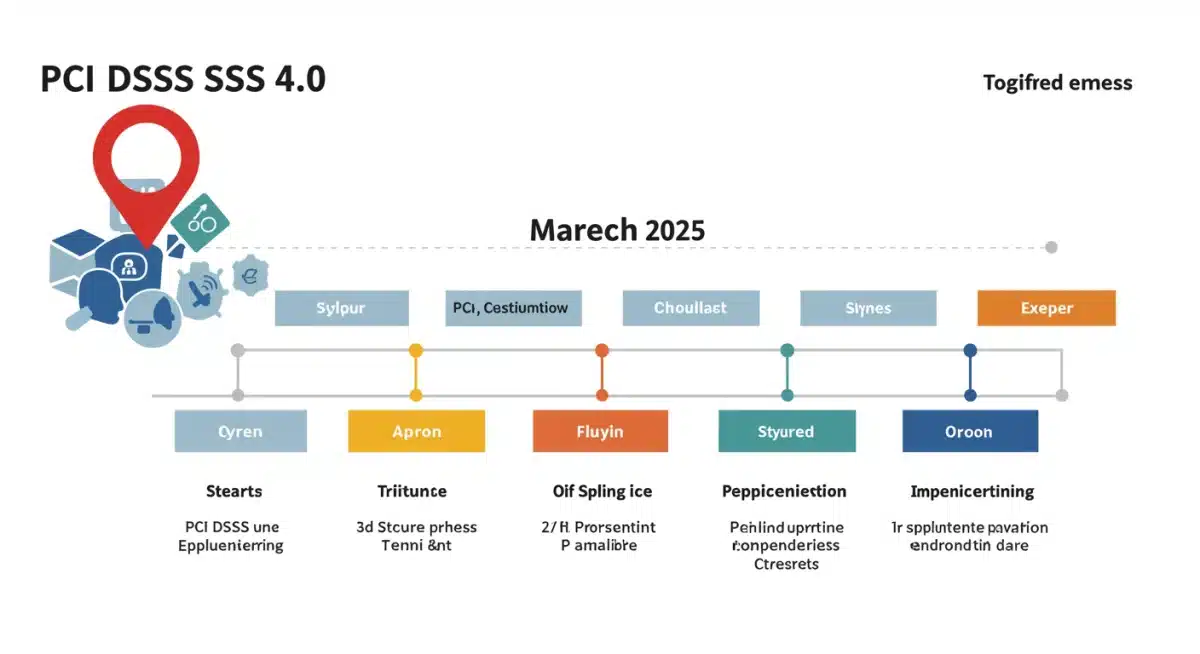
The transition to PCI DSS 4.0 is not an overnight switch but a carefully planned phased rollout, giving organizations time to adapt to the new requirements. While the standard was released in March 2022, the critical deadline for implementing all new requirements for US merchants is March 31, 2025. This extended period is designed to facilitate a smooth migration, but it also means procrastination can lead to significant challenges.
During the initial phase, a transition period was provided where both PCI DSS 3.2.1 and 4.0 were active. This allowed merchants to begin familiarizing themselves with the new standard and start planning their implementation strategies without immediate pressure. However, this grace period is rapidly approaching its end, making the next few months vital for proactive engagement.
Critical Deadlines and Milestones
Merchants should be acutely aware of specific dates and what they signify for their compliance journey. Missing these milestones can result in non-compliance, potential penalties, and increased risk exposure.
- March 31, 2024: This was the date when PCI DSS 3.2.1 officially retired. After this point, all assessments must be conducted against PCI DSS 4.0. While some requirements had an extended deadline, the overarching framework became 4.0.
- March 31, 2025: This is the absolute deadline for all new PCI DSS 4.0 requirements to be fully implemented. Any requirement labeled as a ‘future-dated’ requirement in the standard becomes mandatory by this date.
The period leading up to March 2025 is crucial for merchants to finalize their implementations, conduct thorough testing, and ensure their systems and processes align with all aspects of PCI DSS 4.0. This includes both foundational requirements and the newly introduced ones.
Key New Requirements in PCI DSS 4.0
PCI DSS 4.0 introduces several new requirements aimed at bolstering security in critical areas. US merchants must pay close attention to these additions, as they often necessitate significant changes to existing infrastructure, policies, and procedures. These new mandates reflect a proactive approach to evolving cyber threats.
The standard moves beyond simply protecting data at rest and in transit, extending its scope to include more robust authentication methods, enhanced vulnerability management, and a greater emphasis on continuous monitoring. Understanding these new elements is the first step toward effective implementation.
Critical Updates for Enhanced Security
Merchants should specifically focus on these areas where PCI DSS 4.0 introduces new or significantly modified requirements:
- Targeted Risk Analysis: Organizations must now perform a targeted risk analysis for each customized control, documenting how it meets the intent of the PCI DSS requirement. This moves away from a one-size-fits-all approach.
- Stronger Authentication Requirements: Stricter rules for multi-factor authentication (MFA) are now in place, extending its application to all access to the cardholder data environment (CDE), not just remote access.
- Expanded Scope for Phishing and Social Engineering: New requirements address protecting personnel from phishing and social engineering attacks, recognizing human vulnerability as a significant attack vector.
- Automated Processes for Account Passwords: Requirements for automated mechanisms to detect and prevent brute-force attacks on accounts, including those used by applications and services.
- Enhanced E-commerce Protections: Specific new requirements focus on protecting e-commerce payment pages from malicious tampering, such as Magecart-style attacks.
These new requirements demand a comprehensive review of current security practices, often necessitating investment in new technologies and staff training. The goal is to move from reactive security to a more proactive and resilient posture against sophisticated cyber threats.
Steps for US Merchants to Achieve Compliance by March 2025
Achieving PCI DSS 4.0 compliance by March 2025 requires a structured and diligent approach. US merchants cannot afford to wait, as the changes are extensive and demand careful planning and execution. A clear roadmap is essential to navigate the complexities of the updated standard.
The process typically involves several key stages, from initial assessment and gap analysis to implementation, testing, and ultimately, validation. Each step is interdependent, and a failure in one can jeopardize the entire compliance effort.
A Strategic Compliance Roadmap
Merchants should consider the following actionable steps to ensure they are on track for the March 2025 deadline:
- Conduct a Comprehensive Gap Analysis: Compare existing security controls against all PCI DSS 4.0 requirements, identifying areas of non-compliance. This should include both foundational and new requirements.
- Develop a Detailed Remediation Plan: Based on the gap analysis, create a prioritized plan outlining the necessary changes, resource allocation, and timelines for implementation.
- Implement New Technologies and Processes: This may involve upgrading systems, deploying new security tools, and revising internal procedures to align with 4.0 mandates, particularly around authentication and e-commerce security.
- Train Staff on New Policies: Ensure all relevant personnel are aware of the updated security policies and procedures, especially regarding phishing awareness and data handling.
- Perform Internal and External Testing: Regularly test security controls, conduct penetration testing, and vulnerability scans to identify and address weaknesses before the final assessment.
- Engage with a Qualified Security Assessor (QSA): For larger merchants, working with a QSA early in the process can provide invaluable guidance and help streamline the final validation.
Proactive engagement with these steps will not only help ensure compliance but also significantly enhance the overall security posture of the merchant’s payment ecosystem, protecting both the business and its customers.
The Impact of Non-Compliance: Risks and Penalties
Failing to meet the PCI DSS 4.0 Compliance Deadlines: What US Merchants Must Do by March 2025 (TIME-SENSITIVE) can have severe and far-reaching consequences for US merchants. The implications extend beyond just financial penalties, impacting reputation, customer trust, and operational continuity. Understanding these risks underscores the importance of timely adherence to the standard.
Non-compliance can lead to a cascade of negative outcomes, from direct monetary costs to indirect damages that can be challenging to recover from. Cardholder data breaches, often a direct result of inadequate security, are particularly devastating.
Consequences of Falling Short
Merchants who do not comply with PCI DSS 4.0 by the March 2025 deadline face a range of potential penalties and business disruptions:
- Fines from Payment Brands: Non-compliant merchants can incur substantial monthly fines from credit card companies (e.g., Visa, Mastercard), which can range from thousands to hundreds of thousands of dollars, depending on the volume of transactions and the duration of non-compliance.
- Increased Transaction Fees: Acquirers and payment processors may impose higher transaction fees on non-compliant merchants to offset the increased risk they represent.
- Loss of Processing Privileges: In severe cases of non-compliance or repeated data breaches, merchants may lose their ability to process credit card payments altogether, effectively shutting down a significant revenue stream.
- Data Breach Costs: The financial impact of a data breach includes forensic investigations, legal fees, notification costs, credit monitoring for affected customers, and potential lawsuits.
- Reputational Damage: A data breach or public non-compliance can severely damage a merchant’s brand reputation, leading to a loss of customer trust and a decline in sales.
- Operational Disruptions: Remediation efforts after a breach can divert resources, disrupt normal business operations, and strain IT infrastructure.
The cost of non-compliance far outweighs the investment required to achieve and maintain PCI DSS 4.0 compliance. Proactive measures are the most cost-effective approach to protecting both the business and its customers.
Maintaining Ongoing PCI DSS 4.0 Compliance
Achieving PCI DSS 4.0 compliance by March 2025 is not a one-time event but an ongoing commitment. The standard emphasizes continuous security and adapting to new threats, meaning merchants must establish robust processes for maintaining their compliant status. This involves more than just annual assessments; it requires a culture of security.
The dynamic nature of cyber threats means that security controls must be regularly reviewed, updated, and tested. A static approach will quickly lead to vulnerabilities and potential non-compliance, even after initial certification.
Strategies for Sustained Security
To ensure continuous PCI DSS 4.0 compliance, US merchants should implement the following strategies:
- Continuous Monitoring: Implement tools and processes for 24/7 monitoring of the cardholder data environment (CDE) to detect and respond to security incidents promptly.
- Regular Vulnerability Scans and Penetration Testing: Conduct quarterly vulnerability scans and annual penetration tests to identify new weaknesses that may emerge as systems evolve or new threats surface.
- Incident Response Plan Review and Testing: Regularly review and test the incident response plan to ensure it is effective and that personnel are prepared to act swiftly in the event of a breach.
- Employee Training and Awareness: Conduct ongoing security awareness training for all employees, focusing on current threats like phishing and social engineering, to reinforce best practices.
- Policy and Procedure Updates: Keep security policies and procedures up-to-date with any changes in business operations, technology, or the threat landscape, ensuring they remain aligned with PCI DSS 4.0.
- Documentation and Reporting: Maintain comprehensive documentation of all security controls, configurations, and compliance activities, and regularly report on compliance status to relevant stakeholders.
By embedding these practices into their operational framework, merchants can create a resilient security posture that not only meets PCI DSS 4.0 requirements but also provides robust protection against future threats.
Future-Proofing Your Payment Ecosystem
Beyond simply meeting the March 2025 deadline for PCI DSS 4.0 Compliance Deadlines: What US Merchants Must Do by March 2025 (TIME-SENSITIVE), US merchants should view this transition as an opportunity to future-proof their entire payment ecosystem. The new standard encourages a more proactive and adaptive security posture, which is essential in an era of rapidly evolving cyber threats. Embracing this mindset can provide long-term benefits beyond mere regulatory adherence.
Future-proofing involves not just addressing current compliance requirements but also building flexibility and resilience into systems to anticipate and adapt to future changes in technology, payment methods, and threat vectors. It’s about strategic investment in security.
Building Resilience for Tomorrow’s Threats
Consider these forward-looking strategies to future-proof your payment security:
- Adopt a Risk-Based Approach: Move beyond prescriptive compliance to a model where security investments are prioritized based on a thorough understanding of unique organizational risks. PCI DSS 4.0’s customized approach supports this.
- Invest in Automation: Automate security tasks such as vulnerability scanning, log analysis, and configuration management to improve efficiency, reduce human error, and enhance continuous monitoring capabilities.
- Embrace Cloud Security Best Practices: As more payment infrastructure moves to the cloud, ensure cloud environments are secured with robust controls that align with PCI DSS 4.0 and broader cloud security frameworks.
- Prioritize Data Minimization and Tokenization: Reduce the scope of the cardholder data environment by minimizing the storage of sensitive data and implementing tokenization or encryption wherever possible.
- Foster a Security-First Culture: Integrate security into every aspect of business operations, from software development to employee onboarding, ensuring that security is a shared responsibility.
- Stay Informed on Emerging Threats: Continuously monitor the threat landscape and engage with industry groups to stay ahead of new attack techniques and adjust security strategies accordingly.
By adopting these forward-thinking strategies, US merchants can transform PCI DSS 4.0 compliance from a regulatory burden into a strategic advantage, ensuring long-term security and resilience for their payment operations.
| Key Point | Brief Description |
|---|---|
| March 2025 Deadline | All new PCI DSS 4.0 requirements become mandatory for US merchants by March 31, 2025. |
| Key Changes | PCI DSS 4.0 introduces stronger authentication, enhanced e-commerce protections, and a customized approach to control implementation. |
| Compliance Steps | Merchants should conduct gap analyses, develop remediation plans, implement new tech, and engage QSAs for validation. |
| Risks of Non-Compliance | Fines, increased fees, loss of processing privileges, data breach costs, and severe reputational damage. |
Frequently Asked Questions About PCI DSS 4.0 Compliance
PCI DSS 4.0 introduces new requirements focusing on evolving threats, stronger authentication, and enhanced e-commerce security. It offers more flexibility through a customized approach for implementing controls and emphasizes continuous security rather than periodic checks, adapting to modern payment environments.
The March 31, 2025, deadline marks the date when all new, future-dated requirements within PCI DSS 4.0 become mandatory. After this date, merchants must fully comply with all aspects of the new standard to avoid penalties, increased fees, and potential loss of credit card processing capabilities.
Merchants should prioritize new requirements related to stronger multi-factor authentication for all CDE access, enhanced protection for e-commerce payment pages against tampering, and the implementation of targeted risk analyses for customized controls. Addressing these areas often requires significant planning and resource allocation.
While the customized approach offers flexibility, it typically requires a high level of expertise to implement and validate, including a targeted risk analysis for each customized control. Smaller merchants might find the defined approach more straightforward, unless they have advanced internal security resources or engage specialized consultants.
Merchants should immediately conduct a thorough gap analysis against PCI DSS 4.0, develop a detailed remediation plan, allocate necessary resources, and begin implementing the new requirements. Engaging with a Qualified Security Assessor (QSA) early can also provide crucial guidance and support throughout the transition.
Conclusion
The approaching PCI DSS 4.0 Compliance Deadlines: What US Merchants Must Do by March 2025 (TIME-SENSITIVE) represents a pivotal moment for US merchants. Adhering to these updated standards is not just about avoiding penalties; it’s about fortifying defenses against increasingly sophisticated cyber threats, protecting sensitive cardholder data, and ultimately, preserving customer trust and business continuity. Proactive planning, diligent implementation, and a commitment to ongoing security practices are essential to navigate this transition successfully and secure the future of payment processing.