Smart Shelves & Beacons: Boost In-Store Sales 5% by 2025
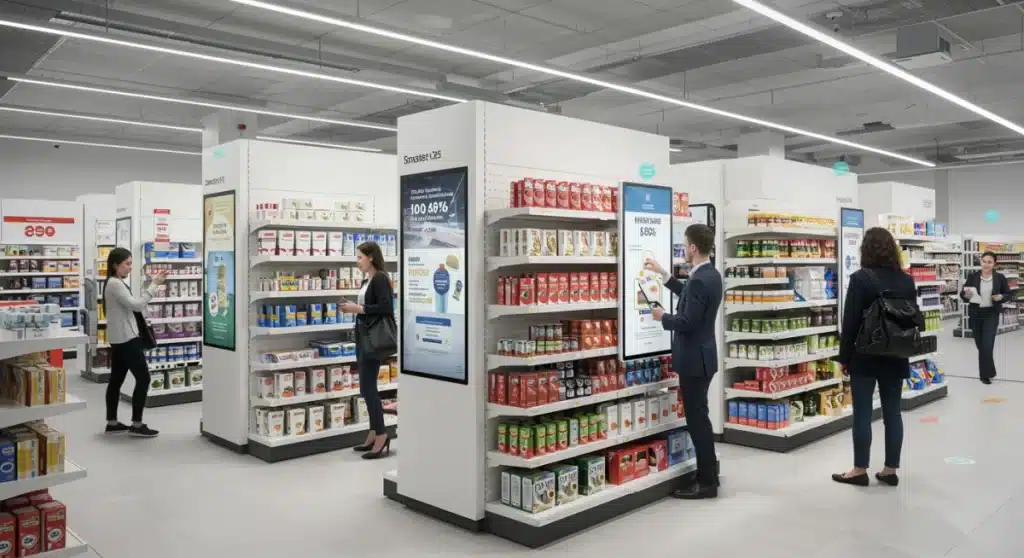
Smart shelves and beacons are poised to transform the retail landscape, enabling dynamic merchandising strategies that are projected to increase in-store sales by 5% by 2025, offering personalized customer experiences.
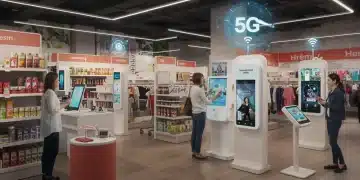
The retail environment is undergoing a profound transformation, driven by technological innovations that are reshaping how consumers interact with products in brick-and-mortar stores. Among these advancements, the integration of smart shelves and beacons stands out as a powerful catalyst, projected to increase in-store sales by a significant 5% through dynamic merchandising strategies by 2025.
The evolution of retail technology: beyond traditional merchandising
For decades, retail merchandising relied on static displays and manual adjustments, often lagging behind rapidly changing consumer preferences and market dynamics. However, the advent of sophisticated technologies has ushered in a new era, one where physical stores can offer experiences as responsive and personalized as their online counterparts. This shift is crucial for retailers looking to thrive in an increasingly competitive landscape.
The core challenge for traditional retail has always been bridging the gap between a shopper’s digital journey and their in-store experience. Consumers today expect instant information, tailored recommendations, and seamless interactions, regardless of the channel. Smart shelves and beacons are key enablers in meeting these heightened expectations, transforming passive shopping into an engaging, data-driven journey.
From static to dynamic: the power of real-time data
- Instant price adjustments: Smart shelves enable retailers to change prices in real-time, responding to competitor pricing, inventory levels, and demand fluctuations without manual intervention.
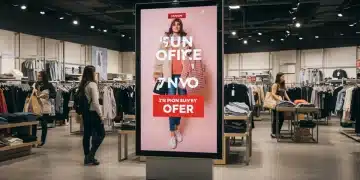
- Personalized promotions: Beacons can detect nearby smartphones, allowing retailers to send targeted promotions and product information directly to shoppers based on their location within the store and past purchasing behavior.
- Inventory accuracy: Integrated sensors on smart shelves provide precise, up-to-the-minute inventory counts, minimizing stockouts and improving supply chain efficiency.
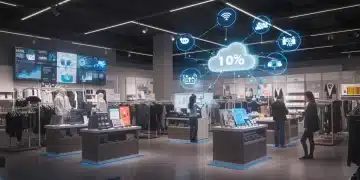
By leveraging real-time data, retailers can move away from one-size-fits-all merchandising. They can create dynamic displays that adapt to individual shoppers, optimize product placement based on sales patterns, and react swiftly to market changes, all contributing to a more efficient and profitable operation.
The evolution of retail technology is not just about adopting new gadgets; it’s about fundamentally rethinking the customer journey and empowering retailers with the tools to deliver exceptional, data-driven experiences. This foundational change sets the stage for significant sales growth and enhanced customer loyalty.
Understanding smart shelves: more than just storage
Smart shelves are sophisticated systems that integrate various sensors, digital displays, and connectivity features directly into the shelving units. They are designed to do far more than simply hold products; they actively participate in the merchandising process, providing real-time insights and enabling dynamic interactions. This technology transforms passive fixtures into active data points and communication hubs.
At their core, smart shelves utilize technologies like RFID (Radio-Frequency Identification), weight sensors, and optical sensors to monitor product presence, quantity, and even customer interaction. This constant flow of data provides retailers with an unprecedented level of visibility into their store operations, allowing for proactive decision-making rather than reactive problem-solving.
Key functionalities of smart shelving systems
- Automated inventory tracking: Sensors continuously monitor stock levels, alerting staff to low inventory or misplaced items, drastically reducing manual inventory checks and stockouts.
- Dynamic pricing displays: E-paper or LCD screens integrated into the shelves can instantly update product prices, promotions, and nutritional information, ensuring accuracy and responsiveness.
- Planogram compliance: By tracking product placement, smart shelves can help retailers ensure that products are displayed according to predefined layouts, optimizing visual appeal and sales potential.
Beyond these core functions, some advanced smart shelf systems also incorporate small cameras or motion sensors to analyze shopper behavior directly at the shelf edge. This can include dwell time, product engagement, and even facial expressions (anonymously, of course), providing valuable insights into what captures customer attention and drives purchasing decisions.
The true power of smart shelves lies in their ability to automate mundane tasks and provide actionable data, freeing up store associates to focus on customer service and more strategic activities. This efficiency gain, coupled with enhanced merchandising capabilities, positions smart shelves as a vital component of modern retail infrastructure.
The role of beacons in personalized in-store experiences
Beacons are small, low-cost wireless transmitters that use Bluetooth Low Energy (BLE) to send signals to nearby smart devices, primarily smartphones. While often unseen by the casual shopper, these unassuming devices are powerful tools for creating highly personalized and contextualized in-store experiences. They act as digital signposts, guiding and engaging customers in real-time.
When a customer with a retailer’s app installed on their smartphone enters a beacon’s range, the beacon can trigger specific actions within the app. This could range from sending a welcome message to offering a discount on a product the customer is currently standing next to. The precision of beacon technology allows for hyper-localized interactions, far more granular than traditional GPS-based location services.
Enhancing customer engagement with beacon technology
- Location-aware notifications: Send push notifications about promotions or product information relevant to the shopper’s exact location within the store. For example, a shopper near the shoe section might receive a discount code for sneakers.
- Indoor navigation: Help shoppers find specific products or departments quickly and efficiently by providing turn-by-turn directions within the store.
- Personalized recommendations: Based on a customer’s browsing history, loyalty program data, and current location, beacons can prompt the app to suggest complementary products or special offers.
The effectiveness of beacons hinges on customer opt-in and the value proposition offered by the retailer’s app. When implemented thoughtfully, beacons can transform a generic shopping trip into a highly relevant and engaging experience, fostering a deeper connection between the brand and the consumer. They represent a crucial link in the chain of dynamic merchandising.
By providing contextually relevant information and offers, beacons help retailers cut through the noise and deliver messages that genuinely resonate with individual shoppers, driving both satisfaction and sales.
Dynamic merchandising in action: case studies and applications
The theoretical benefits of smart shelves and beacons become tangible when observing their application in real-world retail scenarios. Dynamic merchandising, powered by these technologies, allows retailers to be agile, responsive, and ultimately, more successful in converting browsers into buyers. These applications span various retail sectors, demonstrating versatility and impact.
Consider a grocery store utilizing smart shelves to monitor perishable goods. As products approach their expiration date, the digital shelf labels can automatically reduce prices, minimizing waste and maximizing sales. Simultaneously, beacons can alert nearby shoppers through their app about these limited-time discounts, driving immediate foot traffic to those specific items. This integrated approach ensures efficiency and customer engagement.
Successful implementations and future potential
- Apparel retail: Beacons guide shoppers to specific collections or sizes, while smart shelves track inventory in fitting rooms, allowing staff to quickly bring alternative items.
- Electronics stores: Smart shelves display dynamic product specifications, comparison charts, and customer reviews, while beacons offer personalized accessory recommendations based on a shopper’s interest in a particular device.
- Pharmacies: Smart shelves manage high-value or regulated products, ensuring compliance and preventing theft, while beacons provide information on health and wellness products in relevant aisles.
A notable example is a major European supermarket chain that implemented smart shelf technology. They reported a significant reduction in stockouts and a measurable improvement in staff efficiency, allowing employees to spend more time assisting customers rather than managing inventory. Another retail giant used beacons to enhance their loyalty program, sending personalized offers that resulted in a 15% increase in conversion rates for targeted promotions.
These examples illustrate how dynamic merchandising, fueled by smart shelves and beacons, is not just a futuristic concept but a present-day reality delivering measurable business outcomes. The ability to adapt and personalize in real-time is proving to be a critical differentiator in today’s retail landscape.
The projected 5% sales increase: a closer look at the metrics
The projection of a 5% increase in in-store sales by 2025 due to dynamic merchandising with smart shelves and beacons is not an arbitrary figure. It stems from a combination of current pilot program successes, market analysis, and the compounding effects of improved operational efficiency and enhanced customer experience. This growth represents a significant uplift for an industry often battling stagnant physical store sales.
This projected growth is driven by several key factors. Firstly, the reduction in stockouts and improved inventory management directly translates to fewer lost sales opportunities. If a product is on the shelf and priced correctly, it’s more likely to be sold. Secondly, personalized promotions and real-time pricing adjustments create a sense of urgency and relevance for the shopper, encouraging impulse purchases and higher average transaction values.
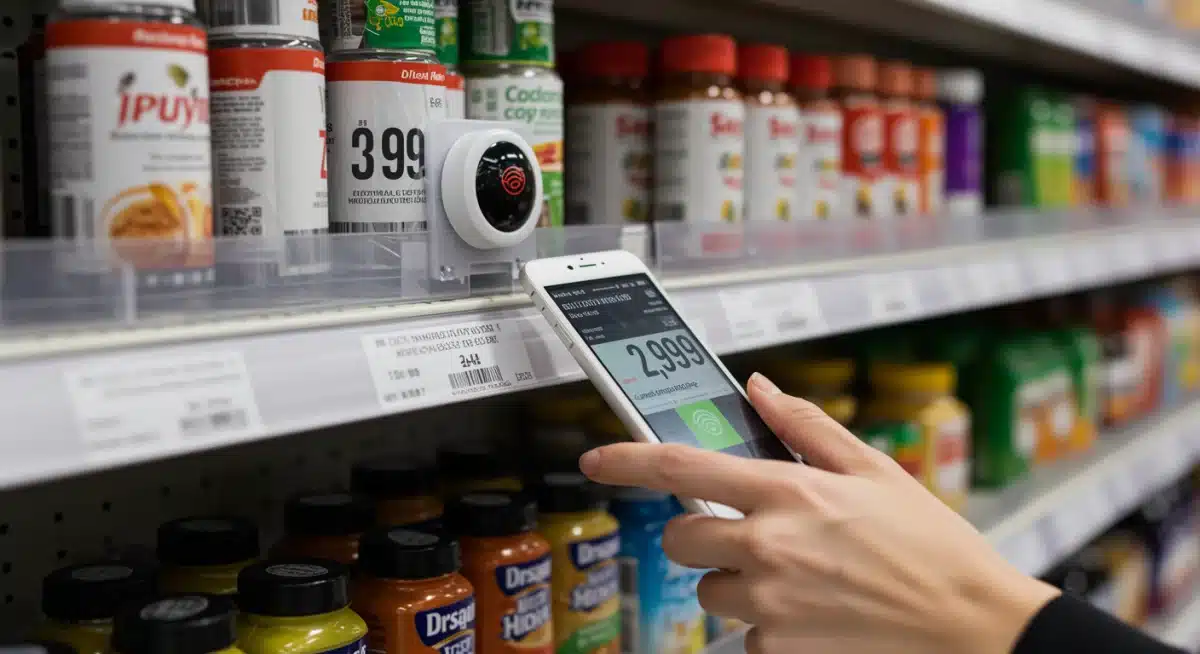
Factors contributing to sales growth
- Reduced lost sales: Accurate inventory on smart shelves ensures products are available when customers want to buy them, preventing walkouts due to unavailability.
- Increased conversion rates: Personalized offers via beacons, combined with compelling dynamic displays, are more likely to convert browsing into purchasing.
- Higher average transaction value: Relevant cross-selling and up-selling suggestions, delivered at the point of decision, encourage shoppers to buy more.
- Enhanced customer loyalty: A positive, personalized in-store experience fosters repeat visits and stronger brand affinity, driving long-term sales.
Beyond direct sales, these technologies also contribute to a better understanding of customer behavior. The data collected from smart shelves and beacons provides invaluable insights into product popularity, merchandising effectiveness, and store layout optimization. This continuous feedback loop allows retailers to constantly refine their strategies, leading to sustained growth.
The 5% sales increase is a conservative yet impactful estimate, reflecting the comprehensive benefits that dynamic merchandising brings to the entire retail ecosystem. It underscores the importance of investing in these technologies to remain competitive and customer-centric.
Challenges and considerations for implementation
While the benefits of smart shelves and beacons are compelling, their successful implementation is not without challenges. Retailers must navigate technical complexities, ensure data privacy, and manage the initial investment required to deploy these advanced systems. A thoughtful and strategic approach is essential to maximize ROI and avoid pitfalls.
One primary concern revolves around the integration of new hardware and software with existing retail infrastructure. Many legacy POS (Point of Sale) and inventory management systems may not be immediately compatible, requiring significant upgrades or custom development. Additionally, the sheer volume of data generated by these systems demands robust analytics capabilities to translate raw information into actionable insights.
Overcoming common hurdles
- Cost of initial investment: Deploying smart shelves and a network of beacons can be expensive. Retailers must conduct thorough cost-benefit analyses and consider phased rollouts.
- Data privacy concerns: Collecting customer location and interaction data requires strict adherence to privacy regulations (e.g., GDPR, CCPA) and transparent communication with shoppers.
- Technical integration: Ensuring seamless connectivity and data flow between smart shelves, beacons, retailer apps, and backend systems can be complex and require skilled IT resources.
- Staff training: Store associates need to be trained not only on the new technology but also on how to leverage the insights it provides to enhance customer service.
Addressing these challenges requires a clear strategy, strong vendor partnerships, and a commitment to change management within the organization. Retailers must also focus on the customer value proposition, ensuring that the technology enhances rather than detracts from the shopping experience. Over-reliance on technology without a human touch can alienate customers.
Despite these hurdles, the long-term benefits of increased sales, improved efficiency, and enhanced customer satisfaction typically outweigh the initial challenges. Strategic planning and a focus on customer experience are paramount for successful adoption.
The future of in-store shopping: seamless integration and AI
Looking beyond 2025, the trajectory for smart shelves and beacons points towards even deeper integration and the pervasive influence of artificial intelligence. The current capabilities are just the beginning of a truly seamless and hyper-personalized in-store shopping experience. The aim is to create environments that are intuitively responsive to individual needs and preferences without feeling intrusive.
Imagine a store where smart shelves not only track inventory but also predict demand with high accuracy, automatically reordering products before they run out. Beacons, combined with AI, could learn individual shopping patterns over time, proactively suggesting items the moment a customer enters an aisle, perhaps even anticipating their needs before they consciously recognize them. This level of predictive analytics will revolutionize merchandising.
Advanced concepts transforming the retail landscape
- Predictive merchandising: AI analyzes data from smart shelves and beacons to anticipate future demand, optimize product placement, and personalize promotions before a customer even thinks about an item.
- Augmented reality (AR) integration: Shoppers could use their smartphones to overlay digital information onto physical products, seeing virtual try-ons or detailed product histories powered by beacon-triggered content.
- Voice-activated assistance: Integrated smart shelf systems could respond to voice queries, guiding shoppers to products or providing additional information hands-free.
- Cashier-less experiences: Smart shelves could facilitate checkout-free shopping, automatically detecting items removed from shelves and charging the customer’s account, similar to Amazon Go stores.
The future of in-store shopping will increasingly blur the lines between the physical and digital worlds. Smart shelves and beacons will serve as the foundational infrastructure, providing the data and connectivity necessary for AI to create truly intelligent retail environments. This evolution promises not just increased sales but also a fundamentally more engaging and convenient shopping journey for consumers.
Retailers who embrace these advanced integrations will be best positioned to capture market share and build lasting customer relationships in the dynamic retail landscape of tomorrow.
| Key Aspect | Brief Description |
|---|---|
| Smart Shelves | Automated inventory, dynamic pricing, and real-time product data for optimal merchandising. |
| Beacons | Location-aware push notifications and personalized offers to shoppers’ smartphones. |
| Dynamic Merchandising | Real-time adaptation of product displays and promotions based on data and customer presence. |
| Sales Increase | Projected 5% uplift in in-store sales by 2025 through optimized operations and customer engagement. |
Frequently asked questions about smart retail technology
Smart shelves use sensors like RFID or weight sensors to continuously monitor product levels. This real-time data automatically updates inventory systems, alerting staff to low stock or misplaced items, significantly reducing manual counts and improving accuracy.
Beacons utilize Bluetooth Low Energy to send localized signals to nearby smartphones with a retailer’s app. This enables personalized push notifications, targeted promotions, and indoor navigation, enhancing the customer’s in-store experience based on their precise location.
Dynamic merchandising leverages real-time data to adjust prices, promotions, and product information instantly. This responsiveness creates relevant offers and a sense of urgency, encouraging impulse buys, improving conversion rates, and increasing average transaction values by meeting customer needs at the point of decision.
The primary privacy concerns involve the collection of customer location and interaction data. Retailers must ensure transparency, obtain explicit customer consent, and comply with data protection regulations like GDPR or CCPA to build trust and avoid privacy breaches.
Yes, while the initial investment can be significant, scalable solutions are emerging. Small businesses can start with a phased approach, focusing on specific high-impact areas or utilizing more affordable cloud-based platforms to gradually integrate these technologies and reap their benefits.
Conclusion
The emergence of smart shelves and beacons represents a pivotal moment in the evolution of retail. These technologies are not merely incremental improvements but foundational shifts that empower brick-and-mortar stores to compete effectively in the digital age. By enabling dynamic merchandising, personalized customer experiences, and unparalleled operational efficiency, they are set to drive a projected 5% increase in in-store sales by 2025. While implementation comes with its challenges, the long-term benefits in terms of customer engagement, sales growth, and competitive advantage are undeniable. Retailers who embrace these innovations will undoubtedly be at the forefront of shaping the future of shopping, delivering richer, more responsive, and ultimately more rewarding experiences for their customers.