2025 Online Age Verification Laws: Protect Your Business

Understanding the evolving landscape of online age verification laws in 2025 is crucial for businesses to avoid substantial non-compliance penalties, requiring strategic implementation of robust verification solutions.
As we approach 2025, businesses operating online face an increasingly complex regulatory environment, particularly concerning online age verification laws. The digital landscape is continuously evolving, and with it, the imperative to protect minors from age-restricted content and products becomes paramount. Ignoring these legal shifts can lead to significant financial penalties, reputational damage, and operational disruptions. This article delves into the latest updates and offers practical solutions to ensure your business remains compliant and secure.
Understanding the Evolving Landscape of Age Verification Laws in 2025
The regulatory framework surrounding online age verification is dynamic, reflecting growing concerns over youth safety in the digital realm. Governments and legislative bodies are actively introducing and refining laws to mandate stricter controls on access to age-restricted goods and services. This evolution is driven by technological advancements, societal expectations, and a clearer understanding of the potential harms associated with underage access.
For businesses, this means moving beyond simple checkboxes and into more sophisticated, reliable verification methods. The days of self-attestation being sufficient are rapidly fading, replaced by demands for robust, data-driven solutions that can withstand scrutiny. Staying informed about these changes is not merely a best practice; it is a fundamental requirement for operating legally and ethically in the online space.
Key Legislative Drivers and Recent Updates
Several legislative initiatives are shaping the future of age verification. These often stem from a desire to protect children from harmful content, prevent underage gambling, or restrict access to products like alcohol, tobacco, and cannabis. Understanding the specific nuances of these laws, both at federal and state levels, is critical for any business operating within the United States.
- State-level mandates: Many states are enacting their own specific age verification laws, often targeting social media platforms, adult content sites, and online retailers of age-restricted products. These can vary significantly, creating a patchwork of regulations.
- Federal considerations: While a comprehensive federal age verification law is still developing, existing laws like COPPA (Children’s Online Privacy Protection Act) are being interpreted more broadly to include stricter age gating. Discussions are ongoing for potential new federal mandates.
- International influences: Global trends in age verification, particularly from the UK and EU, often serve as precursors or inspirations for US legislation. Businesses with international reach must be aware of these broader movements.
The trend is clear: a move towards mandatory, verifiable age checks that go beyond simple declarations. This includes a focus on privacy-preserving solutions that do not compromise user data while still effectively confirming age.
In conclusion, the 2025 landscape for age verification is one of increased scrutiny and heightened expectations. Businesses must proactively engage with these evolving laws to mitigate risks and maintain consumer trust.
Identifying Age-Restricted Products and Services Online
A crucial first step in achieving compliance is accurately identifying which of your online offerings fall under age-restricted categories. This isn’t always straightforward, as definitions can vary by jurisdiction and product type. A thorough internal audit is essential to pinpoint potential areas of risk and ensure that appropriate verification measures are applied consistently across all relevant platforms.
Many businesses mistakenly believe their products are exempt, only to face penalties later. The scope of age-restricted items is expanding beyond the traditionally obvious, now encompassing various digital goods, online services, and even certain types of content. Therefore, a comprehensive and updated understanding of these categories is non-negotiable.
Common Categories Requiring Verification
While the list is extensive and growing, certain product and service categories consistently require robust age verification. These are typically areas where the potential for harm to minors is recognized as significant, leading to proactive legislative intervention.
- Alcohol and Tobacco Products: Online sales of these items are heavily regulated, often requiring strict age verification at the point of sale and delivery.
- Cannabis and CBD Products: With the varying legality across states, online sales demand rigorous age checks to comply with local and federal regulations.
- Adult Entertainment and Content: Websites hosting explicit material are frequently targeted by age verification mandates, often requiring advanced ID checks.
- Gambling and Betting Services: Online casinos, sports betting platforms, and fantasy sports sites must verify users’ ages to prevent underage participation.
- Video Games with Mature Ratings: While less universally enforced, some jurisdictions are exploring age verification for access to games rated for mature audiences.
- Social Media and Online Forums: Increasingly, platforms are being pressured to implement stronger age gates to protect younger users from inappropriate interactions or content.
Beyond these, businesses offering financial services, dating apps, or even certain educational resources might find themselves subject to age verification requirements depending on their specific content or target audience. The key is to assess not just your product, but also the context in which it’s offered and consumed.
Ultimately, a clear understanding of your age-restricted inventory is the foundation upon which all other compliance efforts are built. Ignoring this crucial step leaves your business vulnerable to unforeseen legal challenges and penalties.
Consequences of Non-Compliance: Penalties and Reputational Damage
The failure to comply with online age verification laws carries significant repercussions that extend far beyond simple monetary fines. Businesses that fall short of these legal requirements face a multi-faceted assault on their operations, finances, and public image. The stakes are incredibly high, making proactive compliance an economic and ethical imperative.
In an era where consumer trust is paramount, and social media amplifies every misstep, even a single instance of non-compliance can unravel years of brand building. The financial penalties themselves can be crippling, but the damage to reputation often proves to be far more enduring and difficult to repair.
Financial Penalties and Legal Ramifications
The most immediate and tangible consequence of non-compliance is the imposition of hefty fines. These penalties can vary widely depending on the jurisdiction, the specific law violated, and the severity and frequency of the infraction. Some states levy fines per violation, meaning a single oversight affecting multiple transactions could quickly escalate into millions of dollars.
- Substantial Fines: State and federal agencies can impose fines ranging from thousands to hundreds of thousands of dollars per violation, often with cumulative effects.
- Legal Action and Lawsuits: Non-compliant businesses may face civil lawsuits from affected individuals, advocacy groups, or even state attorneys general.
- Business Restrictions: In severe cases, regulatory bodies can impose operational restrictions, suspend licenses, or even force businesses to cease operations.
- Increased Scrutiny: Once identified as non-compliant, a business often remains under heightened regulatory scrutiny, leading to ongoing audits and increased operational costs.
Beyond the direct financial hit, the legal battles associated with non-compliance can drain resources, divert management attention, and create an atmosphere of uncertainty. The cost of legal defense alone can be astronomical, making prevention far more cost-effective than remediation.
Erosion of Public Trust and Brand Reputation
Perhaps even more damaging than financial penalties is the irreversible harm to a business’s reputation. In today’s interconnected world, news of non-compliance spreads rapidly, leading to a significant loss of public trust. Consumers, especially parents, are increasingly sensitive to companies that fail to protect minors.
Negative publicity can result in boycotts, a decline in sales, and difficulty attracting new customers. Partners and investors may also distance themselves from a brand associated with legal troubles or ethical lapses. Rebuilding a damaged reputation is a long, arduous, and often expensive process, sometimes proving impossible. A strong commitment to age verification, conversely, can enhance brand image, demonstrating responsibility and ethical conduct.
In conclusion, the risks associated with non-compliance are too great to ignore. Businesses must prioritize robust age verification not just to meet legal obligations, but to safeguard their financial health and brand integrity.
Practical Solutions for Robust Online Age Verification
Navigating the complexities of online age verification laws requires more than just awareness; it demands the implementation of practical, effective solutions. The goal is to find methods that are both legally compliant and user-friendly, striking a balance between security and seamless customer experience. There is no one-size-fits-all solution, and businesses often benefit from a multi-layered approach.
The effectiveness of an age verification system hinges on its ability to accurately confirm a user’s age while minimizing friction in the customer journey. This means exploring various technological options and integrating them thoughtfully into your existing platforms.
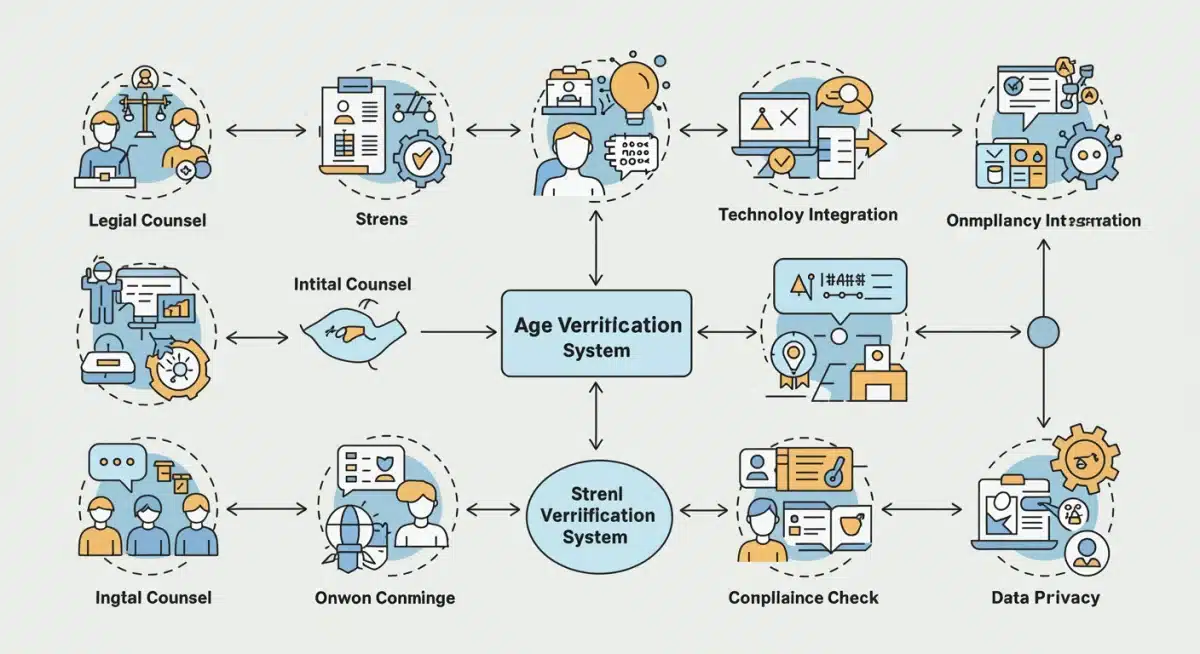
Technological Approaches to Age Verification
Modern age verification leverages a range of technologies, each with its own strengths and applications. The choice of technology often depends on the specific risk profile of the product or service, the target demographic, and the budget available.
- Database Checks: These involve cross-referencing user-provided data (like name and date of birth) against reliable third-party databases, such as credit bureaus or government records. This method is fast and non-intrusive for the user.
- ID Document Verification: Users upload a photo of a government-issued ID (driver’s license, passport). AI-powered systems then authenticate the document’s legitimacy and extract the date of birth. This offers a high level of assurance but can introduce more friction.
- Facial Age Estimation: While still evolving, this technology uses AI to estimate a person’s age from a live selfie or video. It’s becoming more accurate but is often used in conjunction with other methods to enhance reliability.
- Third-Party Age Verification Services: Many specialized providers offer comprehensive age verification solutions, integrating multiple methods and managing compliance complexities for businesses. This can be a cost-effective option for smaller entities.
Each of these methods has privacy implications that must be carefully managed. Businesses must ensure that any data collected for age verification is handled in accordance with privacy laws and best practices, such as GDPR and CCPA.
Implementing a Multi-Layered Verification Strategy
For optimal compliance and user experience, a multi-layered approach is often recommended. This involves combining different verification methods to create a robust system that can adapt to various scenarios and risk levels. For instance, a simple database check might be sufficient for low-risk content, while a higher-risk product might require ID document verification.
Consider offering users multiple verification pathways, allowing them to choose the method they prefer, which can improve conversion rates. Also, ensure your system integrates smoothly with your existing website or application, providing clear instructions and support for users who encounter issues.
In summary, selecting and implementing the right age verification solutions is a critical business decision. It requires careful consideration of legal mandates, technological capabilities, and user experience to build a system that is both effective and sustainable.
Ensuring Data Privacy and Security in Age Verification Processes
While the primary goal of online age verification laws is to protect minors, businesses must also navigate the equally critical imperative of safeguarding user data. The collection of personal information for age verification introduces significant privacy and security responsibilities. A robust age verification system is not just about confirming age; it’s about doing so in a way that respects user privacy and prevents data breaches.
Any process that involves gathering sensitive data, such as dates of birth, names, or copies of identification documents, immediately triggers a host of privacy regulations and ethical considerations. Businesses must demonstrate a clear commitment to data protection at every stage of the verification process.
Adhering to Data Protection Regulations
Several key data protection regulations dictate how personal information collected during age verification must be handled. Compliance with these laws is not optional and requires a deep understanding of their requirements.
- CCPA (California Consumer Privacy Act): For businesses operating in California or serving California residents, CCPA mandates specific rights for consumers regarding their personal information, including the right to know, delete, and opt-out of sales of personal data.
- GDPR (General Data Protection Regulation): Although a European law, GDPR can impact US businesses that process data of EU citizens. It sets high standards for data consent, transparency, and security.
- State-Specific Privacy Laws: A growing number of states are enacting their own privacy laws, creating a complex compliance landscape. Businesses must stay updated on these regional variations.
Beyond these, principles like data minimization (collecting only necessary data), purpose limitation (using data only for its intended purpose), and storage limitation (retaining data only for as long as necessary) are fundamental. Businesses should conduct regular data protection impact assessments to identify and mitigate privacy risks associated with their age verification processes.
Best Practices for Secure Data Handling
Implementing strong security measures is paramount to protect the sensitive data collected during age verification. A data breach can have devastating consequences, leading to regulatory fines, legal liabilities, and a catastrophic loss of customer trust.
This includes encrypting data both in transit and at rest, using secure servers, implementing multi-factor authentication for access to sensitive systems, and conducting regular security audits. Training employees on data privacy best practices is also critical, as human error often contributes to breaches.
Furthermore, businesses should have clear data retention policies, ensuring that age verification data is not stored indefinitely. Once age is confirmed and the verification purpose is fulfilled, data should be anonymized or deleted in accordance with legal requirements. Transparency with users about what data is collected, why it’s collected, and how it’s protected builds trust and fosters a more compliant environment.
In essence, successful age verification in 2025 demands a dual focus: effective age gating and unwavering commitment to data privacy and security. Neglecting either aspect puts your business at significant risk.
Staying Ahead: Continuous Monitoring and Adaptation
The regulatory environment surrounding online age verification laws is not static; it is a continually evolving landscape. For businesses, this means that achieving compliance is not a one-time task but an ongoing commitment to continuous monitoring, evaluation, and adaptation. Resting on past efforts is a recipe for falling behind and risking future non-compliance penalties.
Proactive engagement with legislative changes and technological advancements is critical. Businesses must establish robust internal processes to track new regulations, assess their impact, and adjust age verification strategies accordingly. This forward-looking approach ensures long-term resilience and sustained legal adherence.
Establishing Internal Compliance Protocols
A structured approach to compliance is essential. This involves creating clear internal policies and procedures that govern all aspects of age verification, from data collection to dispute resolution. These protocols should be regularly reviewed and updated to reflect any changes in law or best practice.
- Dedicated Compliance Officer: Designate an individual or team responsible for overseeing age verification compliance and staying abreast of regulatory changes.
- Regular Legal Reviews: Engage legal counsel to periodically review your age verification processes and ensure they align with the latest laws.
- Employee Training: Provide ongoing training to all relevant staff on age verification procedures, data privacy, and the importance of compliance.
- Documentation and Auditing: Maintain detailed records of your age verification policies, implementation efforts, and compliance checks. This documentation is invaluable during audits or in the event of a legal challenge.
These internal protocols create a framework for consistent compliance and demonstrate due diligence, which can be crucial in mitigating penalties if an issue does arise.
Adapting to Technological Advancements and Emerging Threats
The technology landscape is as dynamic as the legal one. New age verification methods emerge regularly, offering improved accuracy, speed, and privacy features. Simultaneously, new methods of bypassing age gates also evolve, posing continuous challenges to online security.
Businesses must be prepared to integrate new technologies that enhance their verification capabilities. This might involve upgrading existing systems, partnering with innovative third-party providers, or exploring emerging solutions like decentralized identity platforms. Staying informed about these advancements ensures that your age verification remains robust against evolving threats.
Furthermore, the nature of age-restricted content and services can change, requiring adjustments to what needs verification. For instance, new digital products or online experiences might suddenly fall under regulatory scrutiny. A flexible and adaptable verification strategy allows businesses to respond effectively to these shifts.
In conclusion, continuous vigilance and a commitment to adaptation are the hallmarks of successful age verification in 2025. Businesses that embed this proactive mindset into their operations will be best positioned to navigate the complex regulatory waters and protect their interests.
Future Trends in Online Age Verification for 2025 and Beyond
Looking beyond the immediate challenges of 2025, the trajectory of online age verification laws suggests a future characterized by increased sophistication, standardization, and integration. The industry is rapidly moving towards solutions that are not only more accurate but also more user-centric and privacy-preserving. Businesses must begin to anticipate these shifts to maintain a competitive edge and ensure long-term compliance.
Emerging technologies and evolving societal expectations will undoubtedly shape the next generation of age verification. Preparing for these future trends now can save significant resources and prevent reactive scrambling later.
Decentralized Identity and Privacy-Enhancing Technologies
One of the most significant trends on the horizon is the rise of decentralized identity (DID) solutions and other privacy-enhancing technologies (PETs). These approaches aim to give individuals greater control over their personal data, allowing them to verify their age without revealing unnecessary information to every website they visit.
- Self-Sovereign Identity (SSI): Users can create and manage their own digital identities, presenting verifiable credentials (like age) without disclosing underlying sensitive data.
- Zero-Knowledge Proofs (ZKPs): These cryptographic methods allow one party to prove they possess certain information (e.g., they are over 18) without revealing the actual information itself.
- Privacy-Preserving Biometrics: Advanced biometric solutions that confirm identity or age without storing raw biometric data, instead using encrypted templates.
These technologies promise a future where age verification is both highly reliable and deeply respectful of individual privacy, aligning with growing consumer demands for data control. Businesses that explore and integrate these solutions early could gain a significant advantage.
Harmonization of Laws and Industry Standards
Currently, the patchwork of state-specific laws creates a compliance headache for many businesses. While a single, overarching federal law might still be some way off, there is a growing push for greater harmonization of age verification standards and regulations. This could manifest as industry-wide best practices, cross-state agreements, or even federal guidelines that provide a clearer path for compliance.
Furthermore, collaboration between technology providers, regulatory bodies, and industry stakeholders is likely to lead to the development of common technical standards for age verification. Such standards would simplify integration, reduce development costs, and improve the overall effectiveness of verification systems across the internet.
The future of online age verification is one of continuous innovation and increasingly stringent requirements. Businesses that embrace emerging technologies and actively contribute to the development of industry standards will be best equipped to thrive in this evolving landscape.
| Key Aspect | Brief Description |
|---|---|
| Evolving Laws | Increased state and federal scrutiny on protecting minors online, moving beyond simple self-attestation. |
| Non-Compliance Risks | Significant financial penalties, legal action, and severe damage to brand reputation and customer trust. |
| Verification Solutions | Utilizing database checks, ID document verification, and multi-layered approaches for accuracy and user experience. |
| Data Privacy | Strict adherence to CCPA, GDPR, and other privacy laws, with robust security for collected user data. |
Frequently Asked Questions About Age Verification
Laws are tightening due to increasing concerns over youth safety in the digital space. Legislators aim to protect minors from age-restricted content and products like gambling, alcohol, and adult material, pushing for more reliable verification methods than simple self-declaration.
Non-compliance can lead to substantial financial penalties, legal action, and significant reputational damage. Businesses may face operational restrictions, loss of customer trust, and increased regulatory scrutiny, impacting their long-term viability and brand image.
Effective methods include database checks, ID document verification (using AI to authenticate government-issued IDs), and facial age estimation. A multi-layered approach combining several methods often provides the most robust and accurate results, balancing security with user experience.
Businesses must adhere to regulations like CCPA and GDPR, employing data minimization, purpose limitation, and secure storage. Implementing encryption, regular security audits, and transparent data retention policies are crucial to protect sensitive user information.
Future trends include decentralized identity solutions like Self-Sovereign Identity and Zero-Knowledge Proofs, offering greater user control over data. There’s also a push for harmonization of laws and industry standards to simplify compliance and improve overall system effectiveness.
Conclusion
The landscape of online age verification laws in 2025 is unmistakably shifting towards greater stringency and sophistication. For any business operating in the digital sphere, proactive engagement with these evolving regulations is no longer optional but a fundamental prerequisite for sustained success. The risks of non-compliance—ranging from crippling financial penalties to irreversible reputational damage—are too significant to ignore. By understanding the legal drivers, identifying age-restricted offerings, implementing robust technological solutions, and prioritizing data privacy, businesses can navigate this complex environment effectively. A commitment to continuous monitoring, adaptation, and embracing future trends will ensure not only legal adherence but also foster greater consumer trust and maintain a competitive edge in an increasingly regulated online world.