CCPA Amendments 2025: Data Governance for Online Retailers

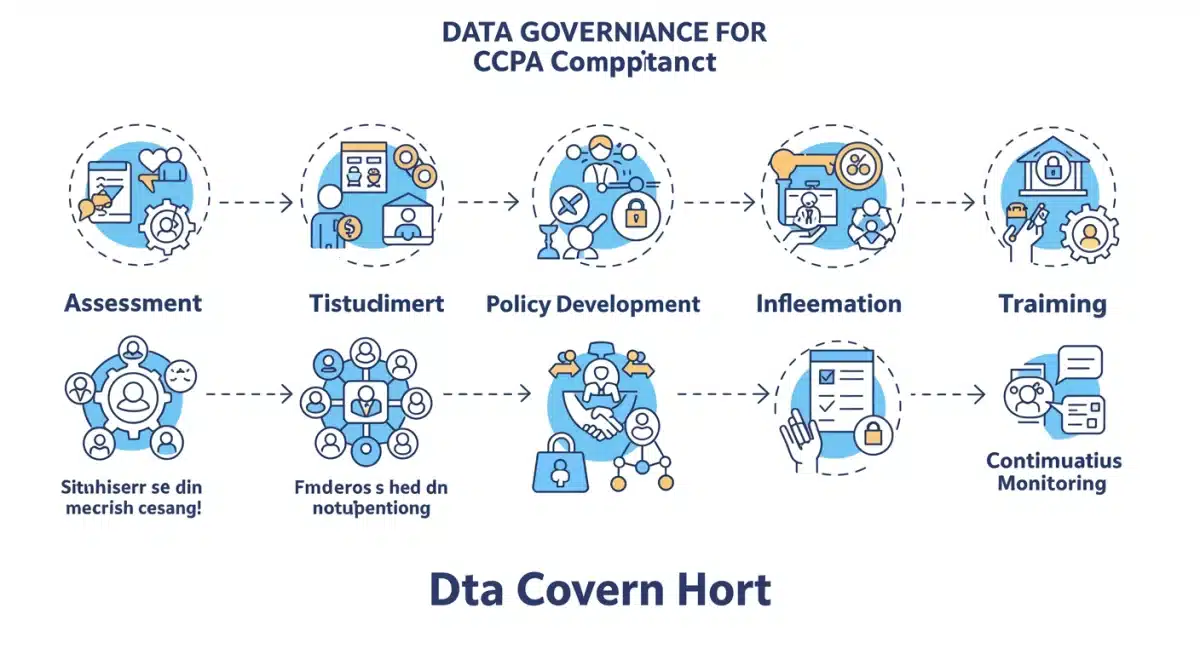
Online retailers must proactively implement a comprehensive 5-step data governance strategy to navigate the impending 2025 California Consumer Privacy Act (CCPA) amendments, ensuring robust compliance and safeguarding consumer data effectively.
The landscape of consumer data privacy is constantly evolving, and for online retailers, staying ahead of regulatory changes is not just good practice—it’s imperative. The California Consumer Privacy Act (CCPA) Amendments in 2025: A 5-Step Guide to Data Governance for Online Retailers (RECENT UPDATES, PRACTICAL SOLUTIONS) is more than just a legal requirement; it represents a significant shift in how personal information must be handled, especially for businesses operating in the digital sphere.
Understanding the Evolving CCPA Landscape
The California Consumer Privacy Act (CCPA), significantly bolstered by the California Privacy Rights Act (CPRA), has fundamentally reshaped how businesses collect, process, and share personal data belonging to California residents. As we approach 2025, further amendments and evolving interpretations continue to refine these obligations, demanding constant vigilance from online retailers.
These amendments are not merely minor tweaks; they introduce new categories of protected data, expand consumer rights, and impose stricter enforcement mechanisms. For online retailers, this means a deeper dive into their data practices, from initial collection points to long-term storage and deletion protocols. A failure to adapt can result in substantial penalties, reputational damage, and a loss of consumer trust.
Key Changes for Online Retailers
Several critical updates are particularly relevant to the e-commerce sector. These changes often target areas where online businesses are most active, such as targeted advertising, data sharing with third parties, and the use of cookies and tracking technologies. Staying informed about these specific areas is paramount for maintaining compliance.
- Expanded definition of ‘personal information’ to include more identifiers.
- Introduction of new consumer rights, such as the right to correct inaccurate personal information.
- Stricter requirements for opt-out mechanisms for data sharing and selling.
- Increased scrutiny on cross-context behavioral advertising.
The evolving regulatory environment underscores the need for a comprehensive and dynamic approach to data governance. Retailers must move beyond a check-the-box mentality and integrate privacy by design into their core operations. This proactive stance not only ensures compliance but also builds a stronger foundation of trust with their customer base.
Step 1: Comprehensive Data Inventory and Mapping
The foundational step in preparing for the CCPA Amendments 2025 is to gain a crystal-clear understanding of the data your organization collects, processes, and stores. This involves a meticulous inventory and mapping exercise that traces the lifecycle of personal information within your systems. Without this detailed insight, it’s impossible to effectively manage compliance.
Begin by identifying all data sources, from website forms and CRM systems to third-party integrations and marketing platforms. Documenting each piece of data, its purpose, and its flow through your organization is crucial. This step often reveals hidden data points and processing activities that might otherwise go unnoticed, posing significant compliance risks.
Identifying All Data Touchpoints
Online retailers interact with customer data at numerous points. Each interaction, whether it’s a website visit, a purchase, or a customer service inquiry, potentially involves the collection of personal information. A thorough audit should cover every single one of these touchpoints.
- Website analytics and tracking cookies.
- Customer registration and account creation forms.
- Purchase histories and transaction details.
- Email marketing subscriptions and engagement data.
- Customer support interactions, including chat logs and call recordings.
Once identified, categorize the data according to CCPA definitions, distinguishing between personal information, sensitive personal information, and aggregated or de-identified data. This classification aids in applying the correct protection measures and understanding which specific CCPA rights apply to each data type. This initial mapping forms the bedrock upon which all subsequent compliance efforts will be built.
Step 2: Updating Privacy Policies and Consent Mechanisms
With a clear understanding of your data landscape, the next critical step for online retailers is to revise and update privacy policies and consent mechanisms to align with the CCPA Amendments 2025. Transparency and clear communication are cornerstones of modern data privacy regulations. Consumers must be fully informed about data practices and have unambiguous ways to exercise their rights.
Your privacy policy should be a living document, reflecting not only current legal requirements but also your actual data practices. It needs to be easily accessible, written in plain language, and comprehensive enough to cover all aspects of data collection, usage, sharing, and retention. Generic templates often fall short of meeting the specific demands of CCPA.
Crafting Clear and Accessible Policies
The days of buried legal jargon are over. CCPA emphasizes readability and clarity. Your privacy policy should clearly articulate:
- What personal information is collected and for what purpose.
- Categories of third parties with whom data is shared.
- Consumer rights under CCPA (e.g., access, deletion, correction, opt-out).
- Methods for consumers to submit privacy requests.
- Contact information for privacy inquiries.
Simultaneously, consent mechanisms must be robust. For certain data processing activities, explicit opt-in consent may be required, while for others, clear opt-out options are essential. This includes cookie consent banners, marketing email preferences, and mechanisms for consumers to easily manage their data sharing choices. Ensure these mechanisms are user-friendly and truly empower the consumer, avoiding any dark patterns designed to confuse or mislead.
Step 3: Implementing Robust Data Security Measures
Data governance under the CCPA Amendments 2025 extends far beyond just policies; it mandates the implementation of robust technical and organizational security measures to protect personal information. Online retailers, by their very nature, handle vast amounts of sensitive customer data, making them prime targets for cyberattacks. A data breach can lead to severe financial penalties, legal challenges, and irreparable damage to brand reputation.
Security is not a one-time fix but an ongoing commitment. It requires a multi-layered approach that addresses various potential vulnerabilities across your IT infrastructure, applications, and data storage solutions. Proactive security measures are essential to prevent unauthorized access, disclosure, alteration, or destruction of personal data.
Key Security Practices for E-commerce
To meet CCPA’s security expectations, online retailers should focus on a combination of best practices:
- Encryption: Encrypt all sensitive personal information, both in transit and at rest.
- Access Controls: Implement strict access controls based on the principle of least privilege.
- Vulnerability Management: Regularly conduct security audits, penetration testing, and vulnerability assessments.
- Incident Response Plan: Develop and regularly test a comprehensive data breach incident response plan.
- Vendor Security: Vet third-party vendors and ensure they meet your security standards and CCPA obligations.
Beyond technical safeguards, fostering a security-aware culture within your organization is equally important. Employee training on data handling best practices and recognizing phishing attempts can significantly reduce human error, a common cause of data breaches. A strong security posture is not just about compliance; it’s about safeguarding your customers’ trust and your business’s future.
Step 4: Establishing Data Subject Request (DSR) Management Processes
A critical component of CCPA compliance, significantly reinforced by the CCPA Amendments 2025, is the ability to efficiently and effectively respond to Data Subject Requests (DSRs). Consumers have the right to know what personal information is collected about them, to request its deletion, to correct inaccuracies, and to opt-out of its sale or sharing. Online retailers must have well-defined processes in place to handle these requests within the stipulated timelines.
Handling DSRs is often complex, requiring coordination across various departments and data systems. A disorganized approach can lead to missed deadlines, non-compliance, and potential fines. Therefore, establishing a streamlined, auditable process is not just recommended, but legally necessary.
Building an Efficient DSR Workflow
An effective DSR management system should include:
- Designated Channels: Clearly communicate multiple methods for submitting DSRs (e.g., web form, toll-free number, email).
- Identity Verification: Implement robust, yet reasonable, methods to verify the identity of the requester to prevent fraudulent requests.
- Data Retrieval Capabilities: Ensure systems can quickly and accurately locate all personal information pertaining to a specific individual across all data repositories.
- Response Timelines: Adhere strictly to the CCPA’s mandated response timelines (e.g., 45 days for initial response, with a possible 45-day extension).
- Documentation: Maintain detailed records of all DSRs received, actions taken, and communications with the data subject.
Automating parts of the DSR process can significantly improve efficiency and reduce the margin for error. However, human oversight remains crucial, especially for complex requests or those requiring judgment calls. Regular training for staff involved in DSR handling is also essential to ensure consistent and compliant responses.
Step 5: Ongoing Compliance Monitoring and Training
Compliance with the CCPA Amendments 2025 is not a one-time project; it’s a continuous journey. The regulatory landscape is dynamic, consumer expectations are evolving, and your own business operations will change over time. Therefore, establishing a robust framework for ongoing monitoring, auditing, and employee training is paramount to maintaining long-term adherence.
Without continuous oversight, even the most meticulously designed privacy program can quickly become outdated or ineffective. Regular checks ensure that your policies and procedures remain aligned with legal requirements and reflect your current data processing activities. This proactive approach helps identify and address potential compliance gaps before they escalate into significant issues.
Fostering a Culture of Privacy
Key elements of ongoing compliance include:
- Regular Audits: Conduct periodic internal and external audits of data practices, security measures, and DSR handling processes.
- Policy Review: Annually review and update privacy policies, terms of service, and internal data handling guidelines.
- Employee Training: Implement mandatory and regular privacy and security training for all employees, especially those handling personal data.
- Technology Updates: Stay informed about and implement necessary updates to privacy-enhancing technologies and security software.
- Regulatory Watch: Monitor official CCPA guidance, enforcement actions, and new legislative proposals to anticipate future changes.
Ultimately, embedding privacy into the organizational culture means that every employee understands their role in protecting customer data. This isn’t just about avoiding penalties; it’s about building trust, enhancing brand reputation, and demonstrating a commitment to ethical data practices in an increasingly privacy-conscious world.
| Key Point | Brief Description |
|---|---|
| Data Inventory | Understand all collected, processed, and stored personal data. |
| Policy Updates | Revise privacy policies and consent mechanisms for clarity and compliance. |
| Security Measures | Implement robust technical and organizational data protection. |
| DSR Management | Establish efficient processes for handling consumer data requests. |
Frequently Asked Questions About CCPA Amendments 2025
The main changes include expanded definitions of personal information, new consumer rights like data correction, stricter rules for data sharing and targeted advertising, and enhanced enforcement mechanisms. Online retailers must adapt their data handling practices significantly to remain compliant with these evolving regulations.
CCPA 2025 places stricter requirements on data sharing, particularly concerning cross-context behavioral advertising and the ‘sale’ of data. Retailers must provide clear opt-out options for consumers and ensure third-party contracts reflect these new obligations, emphasizing transparency and consumer control over their personal information.
A Data Subject Request (DSR) is a consumer’s formal request to exercise their CCPA rights, such as accessing, deleting, or correcting their personal data. Efficiently managing DSRs is crucial for compliance, as retailers must respond within strict timelines and verify the requester’s identity to prevent fraud.
Data encryption is a fundamental security measure for CCPA compliance, protecting personal information from unauthorized access or breaches. Encrypting data both in transit and at rest helps safeguard sensitive customer details, demonstrating a commitment to reasonable security practices as mandated by the act.
Privacy policies should be reviewed and updated at least annually, or whenever there are significant changes to data collection practices, business operations, or regulatory requirements. This ensures the policy accurately reflects current practices and remains compliant with evolving laws like the CCPA Amendments 2025.
Conclusion
The impending California Consumer Privacy Act (CCPA) Amendments in 2025 represent a significant juncture for online retailers. Proactive engagement with these changes, guided by a robust 5-step data governance framework, is not merely about avoiding penalties; it’s about building enduring trust with consumers and fostering a more resilient business model. By diligently assessing data practices, updating policies, fortifying security, streamlining DSR processes, and committing to continuous monitoring and training, online retailers can navigate this complex regulatory landscape with confidence, turning compliance into a competitive advantage in the digital marketplace.