Navigating Supply Chain Shifts: E-commerce Trends for US Businesses in 2025

US e-commerce businesses face significant supply chain shifts in 2025, demanding proactive strategies to mitigate delays and ensure operational resilience through enhanced visibility, nearshoring, and automation.
The landscape for US e-commerce businesses in 2025 is undergoing profound transformations, particularly concerning supply chains. To effectively mitigate delays and maintain competitive advantage, understanding and adapting to these shifts is paramount. This article delves into Navigating Supply Chain Shifts: 3 Key E-commerce Trends for US Businesses to Mitigate Delays in 2025 (PRACTICAL SOLUTIONS, TIME-SENSITIVE), offering insights and actionable strategies.
The Rise of Hyper-Localization and Regional Hubs
The globalized supply chains that once defined e-commerce are rapidly evolving. In 2025, US businesses are increasingly recognizing the strategic imperative of hyper-localization and the establishment of regional distribution hubs. This shift is not merely a response to past disruptions but a proactive measure to enhance resilience and speed in a demanding market.
Moving inventory closer to the end consumer significantly reduces transit times and shipping costs, critical factors in customer satisfaction. This strategy also provides a buffer against large-scale global events, as localized operations are less susceptible to distant geopolitical or environmental challenges. The focus is on creating a more agile and responsive network that can adapt quickly to changing conditions.
Decentralized Inventory Management
Decentralizing inventory across multiple smaller regional hubs, rather than relying solely on large central warehouses, is a core component of hyper-localization. This approach necessitates sophisticated inventory management systems capable of real-time tracking and dynamic allocation.
- Reduced Last-Mile Costs: Shorter distances from hub to customer directly translate to lower fuel consumption and faster delivery times.
- Improved Customer Experience: Expedited shipping options and increased order accuracy contribute to higher customer satisfaction and loyalty.
- Enhanced Risk Mitigation: Diversifying storage locations minimizes the impact of localized disruptions, such as natural disasters or labor shortages.
Strategic Location Selection for Regional Hubs
The success of regional hubs hinges on meticulous site selection. Businesses must analyze demographic data, transportation infrastructure, and local labor markets to identify optimal locations. Proximity to major population centers and key transportation arteries is crucial for maximizing efficiency.
Furthermore, striking a balance between the number of hubs and the operational complexity they introduce is vital. Too few might not provide the desired benefits, while too many could lead to increased overhead and management challenges. Data analytics play a pivotal role in these strategic decisions, guiding businesses toward the most impactful configurations.
Ultimately, the move towards hyper-localization and regional hubs represents a fundamental rethinking of e-commerce logistics. It’s about building a more robust, agile, and customer-centric supply chain that can thrive in the unpredictable environment of 2025 and beyond. This trend empowers US businesses to deliver on promises more consistently, fostering trust and repeat business.
AI-Driven Predictive Analytics and Automation
As supply chains grow more complex, the human capacity to manage and optimize them reaches its limits. In 2025, artificial intelligence (AI) and automation are not just buzzwords but essential tools for US e-commerce businesses aiming to mitigate delays and enhance efficiency. These technologies offer unprecedented capabilities for prediction, optimization, and execution.
AI-driven predictive analytics can forecast demand with remarkable accuracy, anticipate potential disruptions, and recommend optimal inventory levels and routing. Automation, from robotic process automation (RPA) in administrative tasks to physical robots in warehouses, streamlines operations and reduces human error. The synergy between these two technologies creates a more resilient and responsive supply chain.
Forecasting and Demand Planning with AI
Traditional forecasting methods often struggle with the volatility inherent in e-commerce. AI, leveraging machine learning algorithms, can process vast datasets – including historical sales, market trends, weather patterns, and social media sentiment – to generate highly accurate demand forecasts. This allows businesses to proactively adjust their inventory and production schedules.
- Reduced Stockouts: Accurate predictions minimize instances of running out of popular products, preventing lost sales and customer frustration.
- Lower Inventory Costs: Optimized inventory levels reduce warehousing expenses and the risk of obsolescence.
- Proactive Disruption Management: AI can identify patterns indicating potential delays (e.g., port congestion, supplier issues) allowing for contingency planning.
Automation in Warehousing and Logistics
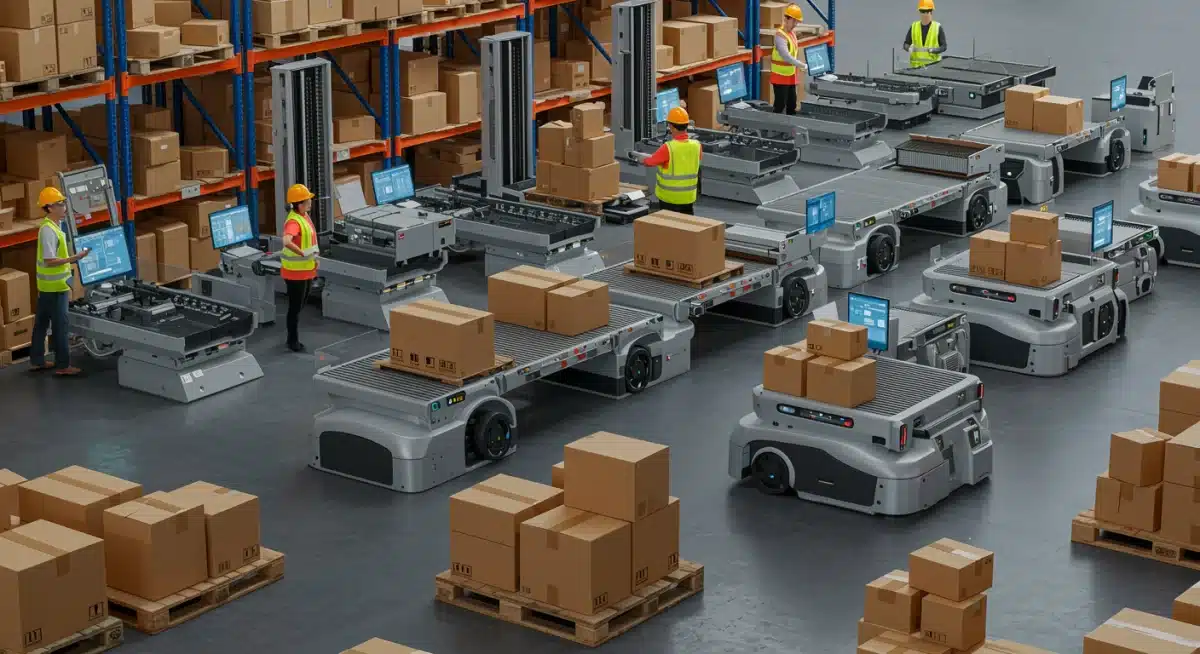
Beyond predictive analytics, automation is transforming the physical aspects of the supply chain. Automated guided vehicles (AGVs), robotic arms, and automated storage and retrieval systems (AS/RS) are becoming commonplace in modern warehouses. These systems significantly speed up picking, packing, and sorting processes.
Furthermore, automation extends to last-mile delivery, with trials of delivery robots and drones gaining traction. While widespread implementation is still some years away, the potential for faster, more cost-effective, and environmentally friendly deliveries is immense. For US businesses, investing in smart automation now lays the groundwork for future competitive advantage.
The integration of AI and automation is not about replacing human workers entirely but augmenting their capabilities. It frees up human capital for more strategic tasks, while machines handle repetitive and labor-intensive processes. This collaborative approach creates a more efficient, less error-prone, and ultimately more resilient e-commerce supply chain for 2025.
Nearshoring and Onshoring for Enhanced Control
The vulnerabilities exposed by global events in recent years have spurred a significant re-evaluation of sourcing strategies. For US e-commerce businesses, 2025 marks a continued acceleration of nearshoring and onshoring efforts. This trend prioritizes proximity and control over the lowest possible production cost, aiming to build more secure and predictable supply chains.
Nearshoring involves moving production or sourcing to neighboring countries, such as Mexico or Canada, while onshoring brings it back to the United States. Both strategies reduce geographical distance, minimize transit times, and simplify logistics. This shift is driven by a desire for greater visibility, reduced lead times, and less exposure to geopolitical risks and international shipping complexities.
Benefits of Reduced Geographic Distance
Shortening the supply chain’s physical length has a cascading positive effect on operational efficiency and risk management. It’s about creating a more direct and manageable flow of goods from production to the customer.
- Shorter Lead Times: Products reach warehouses and customers faster, allowing for quicker response to market demand and trends.
- Reduced Transportation Costs: Less distance typically means lower shipping fees and fuel consumption.
- Increased Agility: Easier communication and quicker feedback loops with suppliers facilitate faster adjustments to production or design.
Mitigating Geopolitical and Logistical Risks
Reliance on distant manufacturing hubs carries inherent risks, from trade disputes and tariffs to port congestion and natural disasters. Nearshoring and onshoring offer a strategic safeguard against these uncertainties, providing US businesses with greater stability.
Furthermore, closer proximity often means operating under similar regulatory frameworks and time zones, simplifying compliance and coordination. While the initial investment might be higher, the long-term benefits of a more resilient and predictable supply chain often outweigh these costs. It’s a strategic investment in future stability and operational continuity, minimizing the potential for costly delays that can erode customer trust and market share.
This trend is not about abandoning global trade entirely, but rather about diversifying sourcing and strategically placing critical components or products closer to home. For US e-commerce businesses, nearshoring and onshoring in 2025 are pivotal for building robust supply chains that can withstand future shocks and deliver consistent performance.
Enhanced Supply Chain Visibility and Transparency
In the intricate world of e-commerce, what you don’t know can certainly hurt you. In 2025, achieving end-to-end supply chain visibility and transparency is no longer a luxury but a fundamental requirement for US businesses. This involves having real-time, comprehensive data on every stage of the product journey, from raw material sourcing to final delivery.
Lack of visibility is a primary contributor to delays, inefficiencies, and poor decision-making. By embracing advanced technologies and collaborative practices, businesses can illuminate their entire supply chain, identifying bottlenecks, anticipating problems, and making informed adjustments proactively. This level of insight empowers businesses to act rather than react.
Leveraging IoT and Blockchain Technologies
Internet of Things (IoT) devices, such as smart sensors and GPS trackers, provide real-time location and condition monitoring of goods in transit and storage. This data is invaluable for tracking shipments, ensuring product integrity (e.g., temperature-sensitive goods), and providing accurate estimated delivery times.
Blockchain technology offers a secure, immutable, and transparent ledger for recording every transaction and movement within the supply chain. This not only enhances traceability but also builds trust among all stakeholders, from suppliers to customers. For US e-commerce businesses, these technologies are pivotal for creating an unassailable record of their supply chain activities.
- Real-time Tracking: Precise location and status updates for all inventory and shipments.
- Proactive Problem Solving: Early detection of potential delays or issues allows for immediate intervention.
- Improved Regulatory Compliance: Detailed, verifiable records simplify audits and ensure adherence to standards.
- Enhanced Customer Communication: Accurate delivery estimates and transparent updates improve customer satisfaction.
Data Integration and Collaborative Platforms
Achieving true visibility requires integrating data from disparate systems across the entire supply chain ecosystem. This includes supplier management systems, warehouse management systems (WMS), transportation management systems (TMS), and customer relationship management (CRM) platforms. Cloud-based platforms facilitate this integration, providing a single source of truth.
Collaborative platforms further enhance transparency by enabling seamless information sharing and communication among all partners – manufacturers, logistics providers, and retailers. This fosters a more cohesive and responsive network, where everyone is working with the same up-to-date information. For US e-commerce businesses, investing in these integrated solutions is crucial for mitigating delays and building a resilient supply chain for 2025.
Ultimately, enhanced supply chain visibility and transparency are about empowering businesses with knowledge. It allows them to move from a reactive posture to a proactive one, making data-driven decisions that optimize efficiency, reduce risks, and ultimately deliver a superior customer experience.
Building Resilient Supplier Relationships
While technology and strategic geographical shifts are vital, the human element of supply chain management remains critical. In 2025, US e-commerce businesses must prioritize building strong, resilient relationships with their suppliers. These relationships move beyond transactional exchanges to foster true partnerships based on mutual trust, transparency, and shared goals.
A robust supplier network acts as a crucial buffer against disruptions. When faced with challenges, established partners are more likely to offer flexibility, prioritize orders, and collaborate on solutions. This proactive approach to supplier management is a cornerstone of mitigating delays and ensuring operational continuity in an unpredictable environment.
Diversification of Supplier Base
Relying on a single supplier, even a highly reliable one, introduces significant risk. Diversifying the supplier base across different geographies and even different companies for critical components or products is a key strategy for resilience. This reduces dependency and provides alternatives when one supplier faces issues.
- Risk Spreading: Lessens the impact if a single supplier experiences production issues, natural disasters, or geopolitical disruptions.
- Increased Negotiation Power: A diversified base can offer more leverage in terms of pricing and contract terms.
- Access to Innovation: Working with multiple suppliers can expose businesses to a wider range of ideas and technological advancements.
Transparent Communication and Collaboration
Open and honest communication is the bedrock of strong supplier relationships. Regularly sharing demand forecasts, potential challenges, and performance feedback fosters a collaborative environment. This transparency allows suppliers to better plan their production and capacity, reducing the likelihood of unexpected delays.
Establishing clear communication channels and protocols ensures that information flows efficiently, especially during times of crisis. Joint planning sessions, shared performance metrics, and even co-investment in new technologies can deepen these partnerships. For US e-commerce businesses, cultivating such relationships in 2025 is an investment in long-term stability and a powerful defense against supply chain volatility.
In essence, building resilient supplier relationships is about recognizing that your suppliers are an extension of your own business. Their success directly impacts yours. By nurturing these partnerships, e-commerce businesses can create a more robust, adaptable, and ultimately more successful supply chain.
Embracing Sustainable and Ethical Practices
Beyond efficiency and resilience, 2025 also brings an increased focus on sustainability and ethical practices within e-commerce supply chains. US businesses are facing growing pressure from consumers, regulators, and investors to demonstrate a commitment to environmental stewardship and social responsibility. Integrating these principles into supply chain management is no longer optional but a strategic imperative.
Sustainable practices can lead to operational efficiencies, such as reduced waste and lower energy consumption, while ethical sourcing enhances brand reputation and consumer trust. Mitigating delays in 2025 is not just about speed, but also about ensuring that goods move through a supply chain that aligns with modern values.
Reducing Environmental Footprint
E-commerce logistics, particularly transportation and packaging, contribute significantly to carbon emissions. Businesses are exploring various ways to reduce their environmental impact, from optimizing delivery routes to using eco-friendly materials.
- Optimized Logistics: Route optimization software reduces fuel consumption and emissions.
- Sustainable Packaging: Using recyclable, biodegradable, or minimal packaging materials.
- Green Warehousing: Implementing energy-efficient warehouse operations, including solar power and efficient lighting.
Ethical Sourcing and Labor Practices
Ensuring that products are sourced and manufactured under ethical conditions is paramount. This involves scrutinizing supplier practices regarding labor rights, fair wages, and safe working conditions. Transparency in the supply chain helps confirm adherence to these standards.
Consumers are increasingly willing to pay more for products from companies with strong ethical credentials. For US e-commerce businesses, demonstrating a commitment to ethical sourcing not only mitigates reputational risks but also builds a loyal customer base. It’s about creating a supply chain that is not only efficient but also responsible and trustworthy, aligning with the evolving values of the 2025 consumer.
Embracing sustainability and ethical practices within the supply chain is a multifaceted challenge, but one that offers substantial long-term rewards. It drives innovation, enhances brand value, and fosters a more sustainable future for e-commerce, ensuring that mitigating delays also contributes to a greater good.
Leveraging Data Analytics for Continuous Improvement
In the dynamic e-commerce landscape of 2025, the ability to collect, analyze, and act upon data is what separates thriving businesses from those struggling with delays. Leveraging sophisticated data analytics is not a one-time project but an ongoing commitment to continuous improvement across the entire supply chain. It provides the insights necessary to identify inefficiencies, predict future trends, and optimize operations systematically.
From tracking order fulfillment rates to analyzing transportation costs and customer feedback, every data point holds potential value. By transforming raw data into actionable intelligence, US e-commerce businesses can fine-tune their supply chain strategies, ensuring they remain agile and responsive to market demands and unforeseen challenges.
Key Performance Indicators (KPIs) and Dashboards
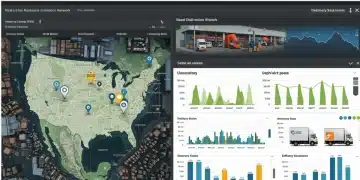
Establishing clear KPIs is fundamental to measuring supply chain performance. These metrics might include order-to-delivery cycle time, inventory turnover rate, supplier defect rate, and transportation costs as a percentage of sales. Visualizing these KPIs through interactive dashboards provides real-time insights into operational health.
- Performance Monitoring: Track key metrics to identify areas of strength and weakness.
- Root Cause Analysis: Data helps pinpoint the underlying reasons for delays or inefficiencies.
- Benchmarking: Compare performance against industry standards and best practices.
Predictive and Prescriptive Analytics
Beyond descriptive analytics (what happened) and diagnostic analytics (why it happened), businesses in 2025 are increasingly utilizing predictive analytics (what will happen) and prescriptive analytics (what should be done). Predictive models, often powered by AI, forecast future demand, potential disruptions, and optimal inventory levels.
Prescriptive analytics takes this a step further by recommending specific actions to achieve desired outcomes or mitigate predicted risks. For example, it might suggest alternative shipping routes during a forecasted weather event or recommend reordering certain products based on anticipated demand spikes. This proactive, data-driven approach is invaluable for US e-commerce businesses seeking to minimize delays and maximize efficiency.
Implementing a robust data analytics framework allows for iterative improvements, where insights gained from data inform strategic adjustments, which are then measured and refined further. This continuous feedback loop ensures that the supply chain remains optimized, adaptable, and a competitive asset for e-commerce businesses in 2025.
| Key Trend | Mitigation Strategy |
|---|---|
| Hyper-Localization | Establish regional hubs to reduce last-mile delays and improve delivery speed. |
| AI & Automation | Implement AI for predictive analytics and automate warehouse operations to boost efficiency. |
| Nearshoring/Onshoring | Shift sourcing and production closer to home to shorten lead times and reduce risks. |
| Visibility & Transparency | Utilize IoT and blockchain for real-time tracking and data integration across the supply chain. |
Frequently Asked Questions About E-commerce Supply Chain Shifts
Hyper-localization is crucial because it significantly reduces last-mile delivery times and costs by placing inventory closer to customers. This strategy enhances customer satisfaction and provides better resilience against global disruptions, making supply chains more agile and responsive to regional demands and challenges.
AI-driven predictive analytics can accurately forecast demand and anticipate disruptions, optimizing inventory and routing. Automation in warehouses, using robots and AGVs, streamlines processes like picking and packing, reducing human error and speeding up order fulfillment, thereby directly mitigating potential delays.
Nearshoring and onshoring offer advantages like shorter lead times, reduced transportation costs, and increased agility due to geographical proximity. They also mitigate geopolitical and logistical risks associated with distant manufacturing, providing US businesses with greater control and stability over their supply chains.
Enhanced visibility, through technologies like IoT and blockchain, provides real-time data on product movement and status. This allows businesses to identify bottlenecks, anticipate potential issues, and make proactive adjustments, preventing delays before they escalate and ensuring smoother, more transparent operations.
Resilient supplier relationships, built on trust and diversification, are crucial for mitigating delays. Strong partnerships ensure flexibility, prioritization, and collaborative problem-solving during disruptions. This reduces dependency on single sources and provides alternatives, safeguarding against unforeseen supply chain challenges and maintaining operational continuity.
Conclusion
Navigating the complex currents of supply chain shifts in 2025 will define the success of US e-commerce businesses. The trends towards hyper-localization, AI-driven automation, strategic nearshoring, enhanced visibility, and robust supplier relationships are not merely theoretical concepts but practical imperatives. By strategically implementing these solutions, businesses can not only mitigate delays but also build more resilient, efficient, and customer-centric supply chains that are prepared for the challenges and opportunities of the future. Proactive adaptation and continuous improvement will be the cornerstones of sustained growth and competitive advantage in this evolving landscape.