POS Systems Evolution: Boosting Customer Experience & Speed by 35% in 2025
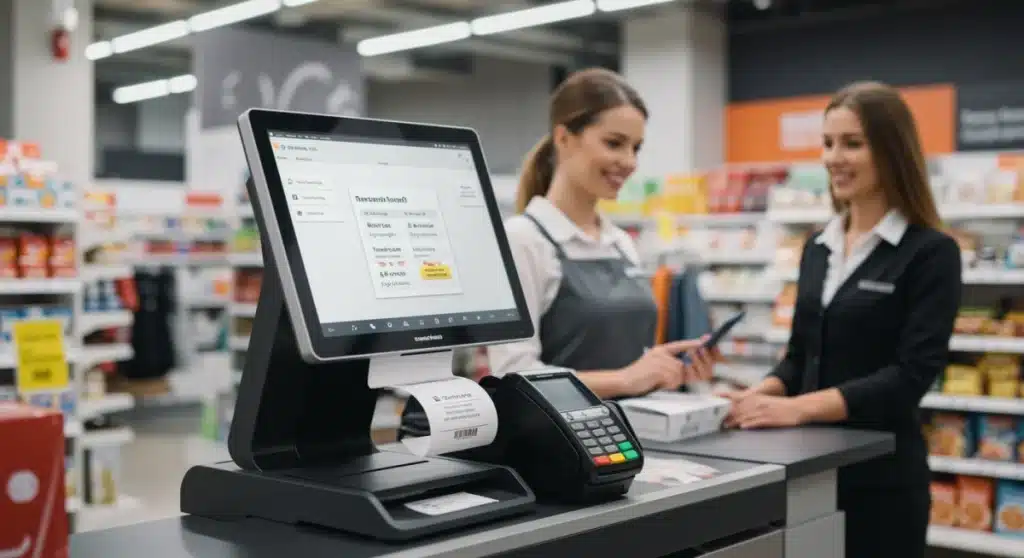
The evolution of POS systems is fundamentally reshaping retail, with advanced technologies expected to elevate customer experience and transaction speed by an impressive 35% by 2025, driven by seamless integrations and data-driven insights.
The retail landscape is constantly shifting, and at its core, the point-of-sale (POS) system remains a pivotal component. However, what once was merely a cash register has undergone a profound transformation. The rapid advancement in technology is driving the evolution of POS systems: enhancing customer experience and speed by 35% in 2025, pushing retailers to rethink their operational strategies and customer engagement.
From basic transactions to integrated retail hubs
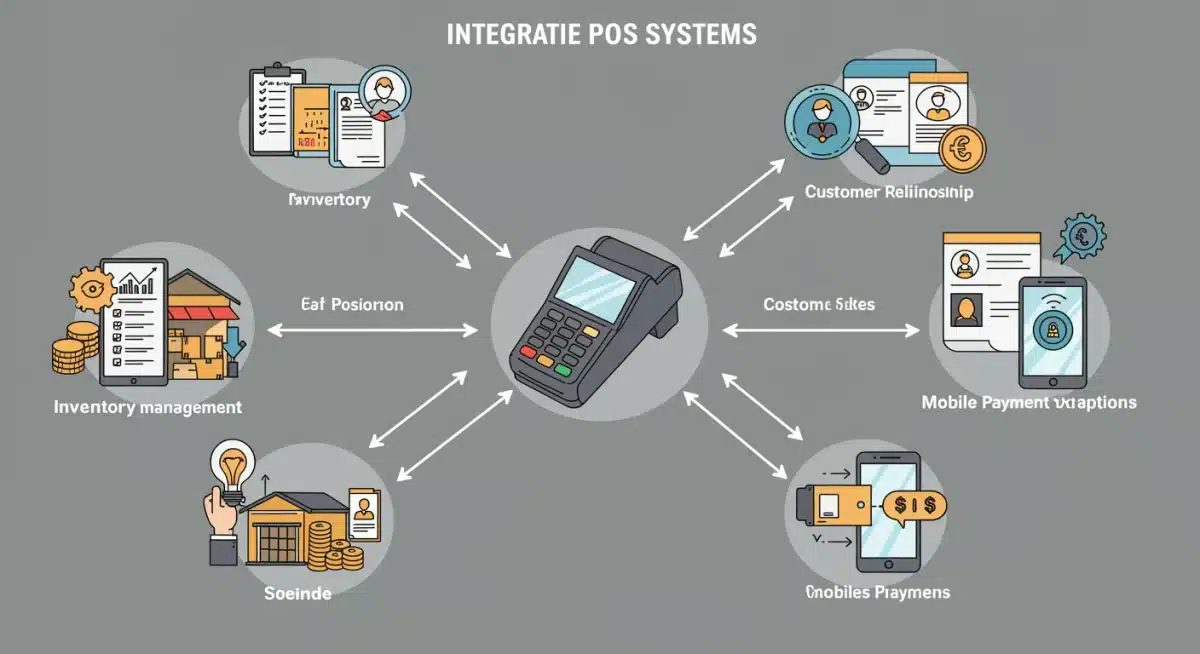
Initially, POS systems were designed for one primary function: processing sales. They were simple, standalone units that recorded transactions and managed basic inventory. However, the demands of modern retail have necessitated a dramatic expansion of these capabilities. Today’s POS systems are far more than just transaction processors; they are sophisticated, integrated retail hubs that touch every aspect of a business, from inventory and customer management to marketing and analytics.
This shift from basic functionality to comprehensive integration is critical for retailers aiming to thrive in a competitive market. The ability to centralize operations and gain a holistic view of the business empowers better decision-making and more efficient resource allocation. The integration of various retail functions into a single system streamlines workflows, reduces manual errors, and provides real-time data crucial for agile business responses.
The rise of cloud-based POS
One of the most significant accelerators in this evolution is cloud computing. Cloud-based POS systems have democratized access to advanced features, allowing businesses of all sizes to leverage powerful retail technology without hefty upfront investments in hardware or complex IT infrastructure.
- Accessibility: Access data and manage operations from anywhere, anytime, on any device.
- Scalability: Easily scale up or down based on business needs, accommodating growth without system overhauls.
- Cost-effectiveness: Reduced hardware costs and lower maintenance expenses compared to traditional on-premise systems.
- Automatic updates: Constant access to the latest features and security enhancements without manual intervention.
The move to the cloud ensures that retailers are always operating with the most current and secure software, providing a stable foundation for innovation and growth. This flexibility is particularly valuable for businesses with multiple locations or those looking to expand rapidly, as it simplifies management and ensures consistency across all touchpoints.
In essence, modern POS systems are no longer just tools for ringing up sales. They are strategic assets that drive operational efficiency, enhance customer interactions, and provide invaluable insights into business performance. The continuous development in this area promises even more transformative capabilities in the years to come, further solidifying the POS system’s role as the central nervous system of retail operations.
Enhancing customer experience through personalized interactions
In today’s retail environment, customer experience is paramount. Consumers expect more than just a transaction; they seek personalized, seamless, and engaging interactions. Modern POS systems are at the forefront of delivering this enhanced experience by enabling sophisticated customer relationship management (CRM) capabilities directly at the point of sale.
Imagine a scenario where a cashier instantly knows a customer’s purchase history, preferences, and loyalty program status. This isn’t futuristic; it’s happening now. Integrated POS and CRM systems allow retailers to offer tailored recommendations, apply personalized discounts, and process loyalty rewards effortlessly, making each customer feel valued and understood. This level of personalization fosters stronger customer relationships and encourages repeat business, moving beyond the transactional to the relational.
Streamlined checkout processes
Speed and convenience are critical components of a positive customer experience, especially during checkout. Long queues and cumbersome payment methods are major deterrents. Modern POS systems address these pain points with advanced features designed to accelerate transactions.
- Mobile POS (mPOS): Enables sales associates to process transactions anywhere on the sales floor, reducing wait times and improving mobility.
- Contactless payments: Supports NFC (Near Field Communication) and other contactless technologies, allowing customers to pay with a tap of their card or smartphone.
- Integrated payment processing: Seamlessly connects with various payment gateways, ensuring fast and secure transactions.
- Self-checkout options: Empowers customers to complete their purchases independently, catering to those who prefer a quick, self-service experience.
These innovations not only speed up the checkout process but also provide customers with a wider range of convenient payment options. By reducing friction at the final stage of the shopping journey, retailers can significantly improve customer satisfaction and reduce cart abandonment rates, directly contributing to the projected 35% enhancement in customer experience and speed by 2025.
Boosting operational speed and efficiency by 35% in 2025
The promise of a 35% increase in operational speed by 2025 is not merely aspirational; it’s a tangible goal driven by the continuous integration and automation capabilities of advanced POS systems. Beyond customer-facing improvements, these systems are revolutionizing back-end operations, making businesses more agile and responsive.
One of the most significant contributions to this efficiency gain comes from real-time data synchronization. Traditional systems often suffered from delays in data transfer between different departments, leading to discrepancies in inventory, sales reports, and customer information. Modern POS systems, especially cloud-based ones, eliminate these silos, providing a single, unified source of truth across the entire organization. This immediate access to accurate data empowers managers to make informed decisions swiftly, whether it’s adjusting staffing levels, optimizing product displays, or launching targeted promotions.
Inventory management automation
Inventory management, often a complex and time-consuming task, is dramatically simplified by contemporary POS systems. Automated features minimize manual effort and reduce errors, directly impacting operational speed and cost efficiency.
- Real-time stock tracking: Automatically updates inventory levels with every sale, purchase, and return.
- Automated reordering: Triggers purchase orders when stock falls below predefined thresholds, preventing stockouts and overstocking.
- Supplier integration: Connects directly with suppliers for streamlined ordering and delivery processes.
- Multi-location inventory visibility: Provides a consolidated view of stock across all stores and warehouses.
By automating these critical functions, retailers can ensure that the right products are always available at the right time, minimizing lost sales due to out-of-stock items and reducing carrying costs associated with excess inventory. This level of precision and automation is a cornerstone of achieving the projected 35% boost in operational speed, allowing businesses to operate with unprecedented efficiency.
The role of data analytics in POS evolution
Data is the new currency in retail, and modern POS systems are powerful engines for collecting, analyzing, and leveraging this invaluable resource. The evolution of POS systems has transformed them into sophisticated data analytics platforms, providing retailers with deep insights into sales trends, customer behavior, and operational performance. This analytical capability is crucial for strategic decision-making and for unlocking the projected 35% enhancement in customer experience and speed.
By capturing every transaction detail, from product purchased to payment method and time of day, POS systems create a rich repository of data. When this data is processed through advanced analytics tools, patterns emerge that would be invisible to the naked eye. Retailers can identify their best-selling products, understand peak shopping hours, analyze the effectiveness of promotions, and even predict future demand with greater accuracy. This predictive power allows for proactive adjustments in inventory, staffing, and marketing strategies, moving businesses from reactive to predictive modes of operation.
Personalized marketing and loyalty programs
Beyond operational insights, data analytics from POS systems fuels highly effective personalized marketing campaigns and loyalty programs. By understanding individual customer preferences and purchasing habits, retailers can segment their audience and deliver targeted messages that resonate.
- Customer segmentation: Grouping customers based on demographics, purchase history, and behavior to tailor marketing efforts.
- Targeted promotions: Offering discounts and deals on products a customer is likely to buy, increasing conversion rates.
- Loyalty program optimization: Designing reward structures that genuinely incentivize repeat purchases and foster long-term customer relationships.
- Feedback analysis: Collecting and analyzing customer feedback to continuously improve products, services, and overall experience.
The ability to personalize the customer journey, from initial browsing to post-purchase engagement, is a direct outcome of robust POS data analytics. This personalization not only enhances the customer experience but also drives sales and builds brand loyalty, making the POS system an indispensable tool for competitive advantage in the modern retail landscape. The strategic use of this data is a key driver for the projected increase in both customer satisfaction and operational efficiency.
Future trends: AI, IoT, and voice commerce integration
Looking ahead, the evolution of POS systems is set to accelerate further with the integration of cutting-edge technologies like Artificial Intelligence (AI), the Internet of Things (IoT), and voice commerce. These advancements promise to unlock new levels of efficiency, personalization, and convenience, driving the projected 35% improvement in customer experience and speed well beyond 2025.
AI, for instance, will move beyond basic data analysis to predictive modeling and autonomous decision-making. Imagine a POS system that not only suggests optimal inventory levels but automatically places orders, or one that analyzes customer sentiment in real-time to adjust promotional offers. AI-powered chatbots integrated with POS can handle routine customer inquiries, freeing up staff for more complex interactions and providing instant support. This intelligent automation will significantly reduce human intervention in repetitive tasks, allowing retailers to focus on strategic growth and enhanced customer engagement.
The impact of IoT and voice commerce
The Internet of Things (IoT) will seamlessly connect various devices within the retail environment, creating a hyper-connected ecosystem where data flows freely and intelligently. Smart shelves that detect low stock, sensors that monitor customer traffic patterns, and smart mirrors that offer personalized product recommendations are all becoming reality. When integrated with the POS system, these IoT devices provide an unparalleled level of real-time operational insight and customer interaction.
- Smart inventory management: IoT sensors on shelves automatically track stock levels and alert staff to replenishment needs.
- Personalized in-store experiences: Beacons and smart displays interact with customer apps to offer tailored promotions and navigation.
- Predictive maintenance: IoT devices monitor equipment health, scheduling maintenance before failures occur, minimizing downtime.
- Enhanced security: Connected surveillance systems integrated with POS data can identify suspicious activities more effectively.
Voice commerce, driven by virtual assistants like Alexa and Google Assistant, is also poised to transform how customers interact with retailers. Future POS systems will likely integrate voice recognition for hands-free transactions, order placement, and customer service. This not only adds a layer of convenience but also caters to a growing segment of consumers who prefer voice-activated interfaces. The convergence of AI, IoT, and voice commerce within the POS framework will create a truly intelligent retail ecosystem, redefining customer expectations and operational benchmarks.
Challenges and considerations in POS adoption
While the benefits of advanced POS systems are clear, their adoption is not without challenges. Retailers must navigate various considerations, from initial investment costs to employee training and data security, to fully realize the projected 35% enhancement in customer experience and speed by 2025. Understanding these hurdles is crucial for a successful transition and maximizing the return on investment.
One of the primary concerns for many businesses, especially small to medium-sized enterprises (SMEs), is the upfront cost associated with upgrading to a new POS system. While cloud-based solutions have lowered the barrier to entry, there are still costs related to hardware, software subscriptions, and potential integration with existing systems. Retailers need to carefully evaluate the total cost of ownership against the long-term benefits and potential ROI to justify the investment. A phased implementation approach or exploring subscription-based models can help mitigate some of these financial pressures.
Data security and privacy concerns
With an increasing amount of sensitive customer and business data flowing through POS systems, data security and privacy have become paramount. Retailers are responsible for protecting this information from breaches and complying with stringent data protection regulations.
- PCI DSS compliance: Ensuring that all payment card data is handled securely according to industry standards.
- Data encryption: Implementing robust encryption protocols for data both in transit and at rest.
- Regular security audits: Conducting frequent assessments to identify and address potential vulnerabilities.
- Employee training: Educating staff on best practices for data handling and security awareness to prevent human error.
Beyond security, ensuring employee adoption and training is equally vital. A sophisticated POS system is only as effective as the people using it. Adequate training programs are necessary to familiarize staff with new interfaces, features, and workflows, ensuring they can leverage the system’s full potential to deliver the promised improvements in speed and customer experience. Overcoming these challenges requires careful planning, a commitment to ongoing training, and a strong focus on cybersecurity to build trust with both employees and customers.
Measuring the impact: KPIs for success
To truly understand if the evolution of POS systems is delivering on its promise of enhancing customer experience and speed by 35% by 2025, retailers must establish clear Key Performance Indicators (KPIs) and continuously monitor them. Without robust measurement, it’s impossible to quantify the impact of these technological investments and make informed adjustments. Effective measurement allows businesses to track progress, identify areas for improvement, and demonstrate the tangible value of their POS system upgrades.
The first step is to define what ‘enhanced customer experience’ and ‘increased speed’ specifically mean for a given business. For some, speed might mean reduced checkout times; for others, it could be faster order fulfillment for online purchases. Similarly, customer experience could be measured by loyalty program engagement, customer satisfaction scores, or repeat purchase rates. By setting precise, measurable goals, retailers can link POS system functionalities directly to business outcomes, ensuring that their technology investments are aligned with strategic objectives.
Key metrics to track
A comprehensive set of KPIs can provide a holistic view of the POS system’s performance across various aspects of the business.
- Average transaction time: Measures the time from scanning the first item to completing the payment, directly reflecting speed improvements.
- Customer satisfaction (CSAT) scores: Gauges customer happiness with the overall shopping and checkout experience.
- Loyalty program enrollment and engagement rates: Indicates the effectiveness of personalized offers and customer retention efforts.
- Inventory accuracy: Reflects the precision of stock levels, impacting availability and operational efficiency.
- Sales conversion rates: Measures the percentage of visitors who make a purchase, influenced by smooth interactions and personalized recommendations.
- Employee productivity: Assesses how efficiently staff can process transactions and manage tasks using the new system.
By regularly analyzing these metrics, retailers can gain actionable insights into how their POS system is performing. This data-driven approach allows for continuous optimization, ensuring that the system evolves with business needs and market demands. Ultimately, the success of the modern POS system lies not just in its features, but in its measurable impact on both the bottom line and the overall customer journey, validating the significant improvements projected for 2025.
| Key Aspect | Impact by 2025 |
|---|---|
| Customer Experience | Enhanced personalization, faster checkouts, and seamless interactions leading to higher satisfaction. |
| Operational Speed | Automated inventory, real-time data, and efficient workflows reducing transaction times and manual errors. |
| Data Analytics | Deeper insights into sales trends and customer behavior for strategic decision-making and targeted marketing. |
| Future Technologies | Integration of AI, IoT, and voice commerce for advanced automation and hyper-personalized retail experiences. |
Frequently asked questions about POS system evolution
The primary driver is the increasing demand for enhanced customer experience and operational efficiency in retail. This includes faster transactions, personalized interactions, and seamless integration of various business functions into a single platform.
By 2025, POS systems will offer more personalized interactions through integrated CRM, faster checkout processes with mobile and contactless payments, and a more engaging shopping journey, contributing to an overall 35% improvement.
Data analytics is crucial for modern POS systems, transforming raw transaction data into actionable insights. This enables retailers to understand sales trends, optimize inventory, personalize marketing, and make data-driven decisions to boost efficiency.
Future POS systems are integrating Artificial Intelligence (AI) for predictive analytics, the Internet of Things (IoT) for smart inventory and in-store experiences, and voice commerce for hands-free operations, creating a more intelligent retail ecosystem.
Key challenges include initial investment costs, ensuring robust data security and privacy, and comprehensive employee training. Overcoming these requires careful planning, phased implementation, and a strong focus on cybersecurity and user adoption.
Conclusion
The journey of POS systems from simple transaction tools to sophisticated retail hubs underscores a fundamental shift in how businesses operate and interact with their customers. The projected 35% enhancement in customer experience and speed by 2025 is not an arbitrary figure but a realistic outcome driven by the relentless pace of technological innovation, particularly in areas like cloud computing, data analytics, AI, and IoT. Retailers who embrace this evolution will be better positioned to meet consumer expectations, optimize their operations, and secure a competitive edge in an increasingly dynamic market. The future of retail is intrinsically linked to the continuous evolution of the POS system, making it an indispensable asset for success.