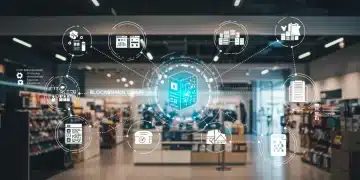
Supply Chain Visibility Tools for US Retailers: 10% Delivery Timeliness by 2025
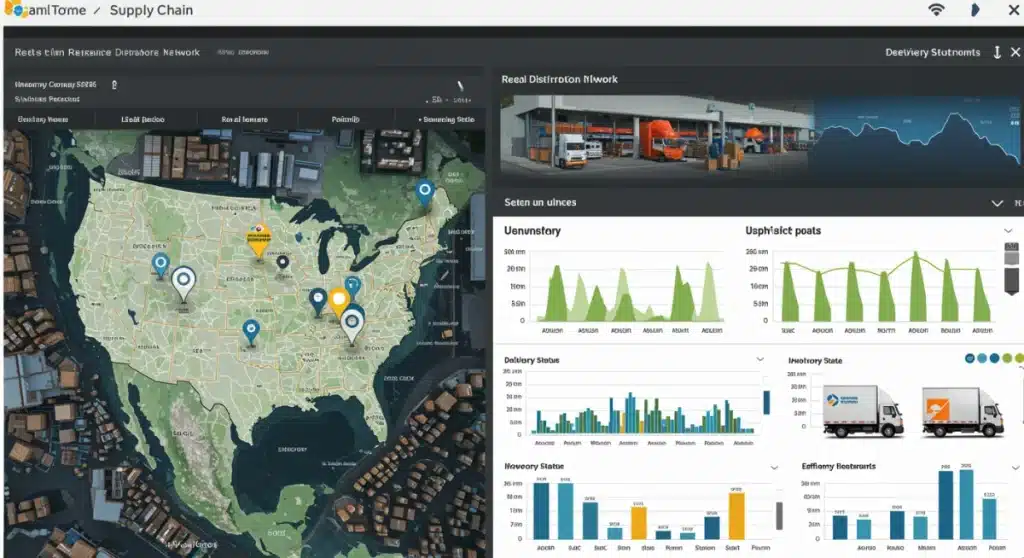
Implementing advanced supply chain visibility tools is critical for US retailers to achieve a targeted 10% improvement in delivery timeliness by January 2025, enabling proactive problem-solving and enhanced operational efficiency.
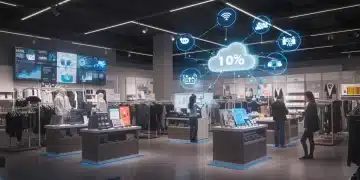
The modern retail landscape demands unparalleled efficiency and precision, especially concerning product delivery. For US retailers, the ambition to improve delivery timeliness by 10% by January 2025 is not just a goal; it’s a strategic imperative for competitive advantage and customer loyalty. This ambitious target is achievable through the strategic adoption of advanced supply chain visibility tools.
Understanding the imperative for supply chain visibility
In today’s interconnected global economy, the supply chain has evolved into a complex web of suppliers, manufacturers, distributors, and logistics providers. For US retailers, navigating this intricacy while meeting rising consumer expectations for rapid and reliable deliveries presents a significant challenge. Without clear visibility into every stage, bottlenecks, delays, and disruptions become inevitable, directly impacting delivery timeliness and customer satisfaction.
Achieving a 10% improvement in delivery timeliness by January 2025 requires a foundational shift in how retailers approach their supply chain. It moves beyond traditional tracking methods to embrace comprehensive, real-time data insights that reveal the true state of goods in transit, inventory levels, and potential disruptions. This proactive approach allows for informed decision-making and swift corrective actions, transforming a reactive process into a predictive one.
The cost of invisibility in retail
Lack of visibility in the supply chain can lead to a cascade of negative consequences for retailers. These include increased operational costs due to expedited shipping, higher inventory holding costs from safety stock, lost sales from stockouts, and significant damage to brand reputation from late deliveries. The financial implications alone underscore the urgent need for robust visibility solutions.
- Increased operational costs: Expedited shipping, demurrage fees, and labor for problem resolution.
- Lost sales and customer churn: Inability to fulfill orders due to unforeseen delays or stockouts.
- Damaged brand reputation: Negative customer experiences due to unreliable delivery promises.
- Inefficient inventory management: Overstocking or understocking leading to capital tie-up or lost opportunities.
Ultimately, understanding the imperative for supply chain visibility isn’t just about avoiding problems; it’s about unlocking new opportunities for efficiency, cost savings, and superior customer service. It’s the cornerstone upon which the 10% delivery timeliness improvement goal can be built, fostering a more resilient and responsive retail operation.
Key features of effective supply chain visibility platforms
Effective supply chain visibility platforms are not merely tracking systems; they are sophisticated ecosystems designed to provide end-to-end insights across the entire logistics network. To truly enable US retailers to improve delivery timeliness by 10% by January 2025, these platforms must offer a range of crucial features that go beyond basic data collection, focusing on actionable intelligence and predictive capabilities.
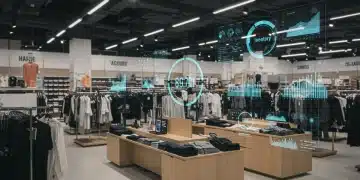
These tools integrate data from various sources, including carriers, warehouses, and suppliers, to create a unified, real-time view of the supply chain. This holistic perspective is vital for identifying inefficiencies, anticipating potential disruptions, and making data-driven decisions that optimize delivery schedules and routes.
Real-time tracking and monitoring
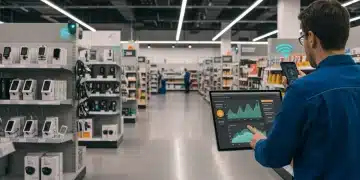
At the heart of any effective visibility platform is the ability to track shipments and inventory in real time. This involves GPS tracking for vehicles, RFID for goods within warehouses, and EDI (Electronic Data Interchange) for seamless communication between partners. Instant updates on location, status, and estimated arrival times are non-negotiable for modern retail.
- GPS tracking: Precise location data for goods in transit, enabling dynamic route adjustments.
- RFID and IoT sensors: Real-time inventory levels, temperature monitoring, and condition tracking within storage and transit.
- EDI integration: Standardized data exchange with carriers, suppliers, and third-party logistics providers (3PLs).
Predictive analytics and AI capabilities
Moving beyond mere tracking, the most advanced platforms leverage artificial intelligence and machine learning to predict potential delays or disruptions. By analyzing historical data and current conditions, these tools can forecast weather impacts, traffic congestion, port delays, and even labor shortages, allowing retailers to proactively mitigate risks.
Furthermore, AI can optimize routing, suggest alternative transportation modes, and even recommend optimal inventory placement to ensure that goods are always where they need to be, precisely when they are needed. This predictive power is a game-changer for achieving ambitious delivery targets.
A comprehensive supply chain visibility platform provides the technological backbone necessary for US retailers to not only meet but exceed their delivery timeliness goals. By offering real-time data, predictive insights, and robust collaboration features, these tools empower businesses to transform their logistics operations into a competitive advantage.
Integrating visibility tools with existing retail infrastructure
The successful implementation of supply chain visibility tools for US retailers aiming for a 10% improvement in delivery timeliness by January 2025 depends heavily on their seamless integration with existing retail infrastructure. This isn’t just about plugging in new software; it’s about creating a cohesive technological ecosystem where data flows freely and intelligently across all operational touchpoints.
Many retailers already utilize various systems such as Enterprise Resource Planning (ERP), Warehouse Management Systems (WMS), and Transportation Management Systems (TMS). The new visibility platform must be capable of integrating with these legacy systems, avoiding data silos and ensuring a single source of truth for all supply chain information.
Challenges and solutions in integration
Integrating new visibility tools can present several challenges, including data format discrepancies, compatibility issues with older systems, and the need for robust API (Application Program Interface) development. Addressing these challenges requires careful planning, often involving IT specialists and solution providers working closely together.
- Data standardization: Establishing common data formats and protocols across all integrated systems.
- API development: Building custom APIs or utilizing existing ones to facilitate data exchange between disparate platforms.
- Cloud-based solutions: Leveraging cloud infrastructure for greater flexibility, scalability, and easier integration with various services.
Benefits of seamless integration
When visibility tools are seamlessly integrated, the benefits are profound. Retailers gain a unified view of their entire supply chain, from order placement to final delivery. This eliminates manual data entry, reduces errors, and significantly speeds up decision-making processes. Moreover, it empowers different departments—from sales and marketing to logistics and customer service—with consistent, up-to-date information.
Seamless integration also enhances the accuracy of predictive analytics, as AI algorithms have access to a richer, more complete dataset. This allows for more precise forecasts and better-informed strategic planning, directly contributing to the goal of improved delivery timeliness. Ultimately, a well-integrated system transforms the supply chain from a series of disconnected operations into a fluid, responsive, and highly efficient network.
Measuring impact: achieving the 10% delivery timeliness goal
The ambitious goal of improving delivery timeliness by 10% for US retailers by January 2025 is not merely about implementing new technology; it’s about rigorously measuring the impact of these changes. Without clear metrics and consistent monitoring, it’s impossible to ascertain whether the investment in supply chain visibility tools is yielding the desired results. Establishing a robust framework for performance measurement is therefore paramount.
Key Performance Indicators (KPIs) must be defined and tracked meticulously to quantify the improvements. These KPIs should directly relate to delivery timeliness, encompassing various stages of the supply chain, from order processing to last-mile delivery. Regular analysis of these metrics will provide actionable insights, allowing retailers to fine-tune their strategies and ensure they stay on track to meet their target.
Essential KPIs for delivery timeliness
To effectively measure the 10% improvement, retailers should focus on a set of precise KPIs. These metrics offer a comprehensive view of delivery performance and highlight areas that require further attention. Beyond the overall timeliness percentage, breaking down performance by region, carrier, or product category can reveal specific opportunities for optimization.
- On-time delivery rate: Percentage of orders delivered by the promised date.
- Average delivery time: The mean duration from order placement to customer receipt.
- Order fulfillment accuracy: Percentage of orders delivered correctly without errors or damages.
- Lead time variability: The consistency of delivery times, indicating predictability.
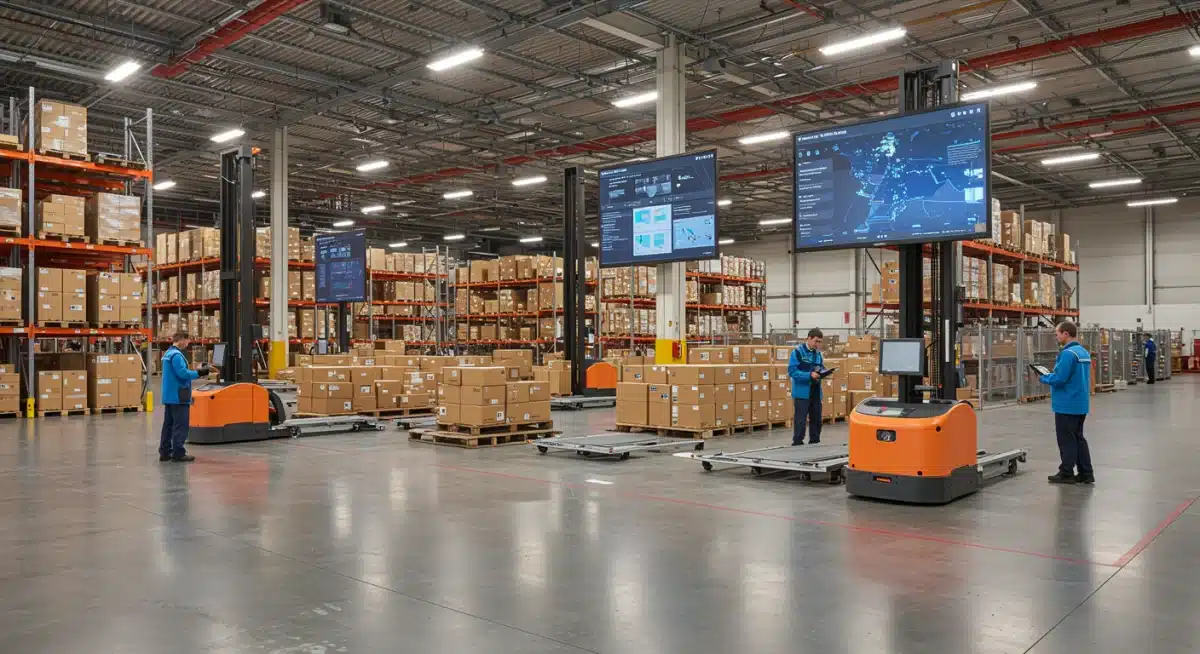
Analyzing these KPIs over time will not only demonstrate progress towards the 10% goal but also identify specific pain points within the supply chain. For instance, a consistently low on-time delivery rate for a particular region might indicate an issue with a specific carrier or a need for localized inventory adjustments.
Leveraging data for continuous improvement
The data collected from supply chain visibility tools and performance metrics should not just be reported; it should be actively used for continuous improvement. Retailers should establish feedback loops where performance data informs strategic decisions, operational adjustments, and even supplier negotiations. This iterative process ensures that the supply chain remains agile and responsive to evolving market demands.
Regular reviews of performance against the 10% timeliness target will enable retailers to celebrate successes, learn from shortcomings, and adapt their strategies as needed. This data-driven approach transforms the supply chain into a dynamic asset, constantly optimized for speed, reliability, and ultimately, enhanced customer satisfaction.
Overcoming challenges in supply chain visibility adoption
While the benefits of supply chain visibility tools are clear, particularly for US retailers striving to improve delivery timeliness by 10% by January 2025, the adoption process is not without its challenges. Overcoming these hurdles requires a strategic approach, encompassing technological considerations, organizational alignment, and a commitment to change management. Identifying and addressing these potential roadblocks early on is crucial for successful implementation and achieving the desired outcomes.
One of the primary challenges lies in the sheer complexity of modern supply chains, involving numerous disparate systems and stakeholders. Integrating these elements into a unified visibility platform demands careful planning and execution, often requiring significant initial investment in both technology and training.
Common adoption hurdles
Retailers often face a variety of obstacles when attempting to implement new supply chain visibility solutions. These can range from technical difficulties to resistance from internal teams or external partners. Addressing these hurdles proactively can significantly smooth the transition and accelerate the realization of benefits.
- Data fragmentation and quality: Inconsistent data formats and poor data quality from various sources.
- Resistance to change: Employees and partners accustomed to traditional methods may resist new processes.
- Cost of implementation: Significant upfront investment in software, hardware, and training.
- Lack of skilled personnel: Shortage of expertise to manage and interpret complex data from visibility platforms.
Strategies for successful adoption
To navigate these challenges, retailers should adopt a multi-faceted strategy. This includes fostering a culture of data-driven decision-making, investing in comprehensive training programs, and selecting scalable, user-friendly solutions. Strong leadership and clear communication are also vital to ensure buy-in from all stakeholders.
Partnering with experienced technology providers who offer robust support and integration services can also mitigate many technical challenges. Furthermore, starting with a pilot program in a specific segment of the supply chain can allow retailers to test the solution, gather feedback, and demonstrate value before a full-scale rollout. By systematically addressing these hurdles, US retailers can successfully adopt supply chain visibility tools and confidently work towards their 10% delivery timeliness improvement goal.
The future of retail: sustained timeliness through visibility
As US retailers push to improve delivery timeliness by 10% by January 2025, the journey doesn’t end with initial implementation. Instead, it marks the beginning of a sustained commitment to leveraging supply chain visibility for ongoing operational excellence and competitive advantage. The future of retail is inextricably linked to the ability to maintain and continuously enhance delivery speed and reliability, driven by intelligent, data-rich supply chain management.
The retail landscape is constantly evolving, with consumer expectations for speed and transparency continuing to rise. Therefore, static solutions will quickly become obsolete. Retailers must embrace a mindset of continuous improvement, regularly reviewing their visibility tools, updating their strategies, and adapting to new technologies and market dynamics. This proactive stance ensures long-term success in an increasingly demanding environment.
Evolving technologies and trends
The field of supply chain technology is rapidly advancing, with innovations like blockchain for enhanced traceability, advanced robotics for warehouse automation, and further integration of AI and machine learning. Retailers committed to sustained timeliness will need to monitor these trends and strategically adopt new technologies that can further optimize their supply chain operations.
- Blockchain: Providing immutable records for enhanced transparency and trust across the supply chain.
- Robotics and automation: Speeding up warehouse operations, inventory management, and order fulfillment.
- Digital twins: Creating virtual models of the supply chain to simulate scenarios and optimize performance.
- Hyper-personalization: Tailoring delivery options and experiences based on individual customer preferences.
Building a resilient and responsive supply chain
Beyond just timeliness, continuous visibility fosters a more resilient and responsive supply chain. By having real-time insights into potential disruptions—whether from natural disasters, geopolitical events, or unexpected demand shifts—retailers can quickly pivot, activate contingency plans, and minimize impacts. This agility is vital for maintaining delivery promises even in turbulent times.
Ultimately, the future of retail involves a supply chain that is not just efficient but also intelligent and adaptive. Sustained timeliness through visibility will empower US retailers to not only meet the 10% improvement goal but also to build enduring customer loyalty, optimize costs, and secure a leading position in the competitive market for years to come. This commitment transforms logistics from a cost center into a strategic differentiator.
| Key Aspect | Brief Description |
|---|---|
| Timeliness Goal | US retailers aim for 10% improved delivery timeliness by January 2025. |
| Visibility Tools | Real-time tracking, predictive analytics, and AI are crucial for optimization. |
| Integration Importance | Seamless integration with ERP/WMS is vital for a unified data view. |
| Continuous Improvement | Ongoing monitoring, KPI analysis, and tech adoption ensure sustained success. |
Frequently asked questions about supply chain visibility
Primary benefits include improved delivery timeliness, reduced operational costs, enhanced customer satisfaction, better inventory management, and increased resilience against disruptions. Real-time insights enable proactive decision-making, minimizing delays and optimizing resource allocation across the entire logistics network.
By providing real-time data on shipments and inventory, predictive analytics to foresee delays, and optimized routing, these tools allow retailers to identify bottlenecks and address issues proactively. This leads to more efficient logistics, faster transit times, and ultimately, a significant boost in on-time deliveries.
Common challenges include integrating new systems with existing legacy infrastructure (ERP, WMS), ensuring data quality and standardization, managing the initial cost of implementation, and overcoming resistance to change from employees and partners. Strategic planning and vendor support are crucial for success.
AI and machine learning are vital for predictive analytics, allowing platforms to forecast potential disruptions like weather delays or traffic. They also optimize routes, suggest alternative solutions, and enhance inventory placement, transforming reactive supply chains into proactive, intelligent systems that improve efficiency and timeliness.
Data integration is critical. It ensures that information flows seamlessly between all systems (e.g., ERP, WMS, TMS, carrier platforms), eliminating data silos and providing a unified, accurate view of the entire supply chain. This holistic perspective is essential for informed decision-making and optimal operational efficiency.
Conclusion
The pursuit of a 10% improvement in delivery timeliness by January 2025 is an ambitious yet entirely achievable goal for US retailers, fundamentally driven by the strategic adoption and masterful utilization of supply chain visibility tools. These platforms offer more than just tracking; they provide a comprehensive, real-time understanding of the entire logistics network, empowering retailers to anticipate challenges, optimize operations, and make data-driven decisions. By focusing on robust integration, rigorous performance measurement through key KPIs, and a commitment to continuous improvement, retailers can transform their supply chains into powerful engines of competitive advantage. The future of retail success will undoubtedly belong to those who embrace visibility not just as a technology, but as a core philosophy for delivering unparalleled customer experiences.