Robotics in Warehousing: Boosting US Retail Fulfillment by 22% in 2025
Robotics in warehousing are set to dramatically optimize order fulfillment speeds for US retailers by 22% in 2025, addressing critical labor shortages and enhancing operational efficiency across the supply chain.
The landscape of retail is undergoing a profound transformation, driven by an insatiable consumer demand for speed and efficiency. In this rapidly evolving environment, the integration of robotics in warehousing is emerging as a cornerstone for US retailers aiming to optimize order fulfillment speeds by a projected 22% in 2025. This isn’t merely an upgrade; it’s a fundamental shift in how goods move from storage to the customer’s doorstep, promising unprecedented operational agility and resilience.
The imperative for speed in modern retail
In today’s competitive retail market, speed isn’t just a luxury; it’s a fundamental expectation. Consumers, accustomed to instant gratification, demand faster delivery times and seamless shopping experiences. This pressure directly impacts warehouse operations, pushing retailers to find innovative ways to accelerate every step of the fulfillment process.
The traditional manual warehousing model, while foundational for decades, is increasingly struggling to keep pace with the exponential growth of e-commerce. The sheer volume of orders, coupled with the need for personalized packing and swift dispatch, necessitates a paradigm shift. Retailers are realizing that incremental improvements won’t suffice; a transformative solution is required to meet future demands.
E-commerce growth and consumer expectations
The surge in online shopping has irrevocably altered consumer behavior. Customers now expect same-day or next-day delivery as a standard, a benchmark heavily influenced by market leaders. This expectation places immense pressure on supply chains, requiring warehouses to operate with peak efficiency and minimal error rates.
- Increased order volumes and complexity.
- Demand for faster delivery times and accuracy.
- Need for scalable and flexible operations.
- Pressure to reduce operational costs while enhancing service.
Moreover, returns processing, a critical but often overlooked aspect of e-commerce, also benefits significantly from enhanced speed and accuracy. Efficient handling of returns contributes to customer satisfaction and reduces loss for retailers. The imperative for speed extends beyond just outbound logistics, encompassing the entire lifecycle of a product within the retail ecosystem.
The drive for speed is not just about meeting consumer demands but also about gaining a competitive edge. Retailers who can consistently deliver faster and more reliably are better positioned to capture market share and build customer loyalty. This makes investing in technologies that accelerate fulfillment not just an operational decision, but a strategic business imperative.
Understanding robotics in modern warehousing
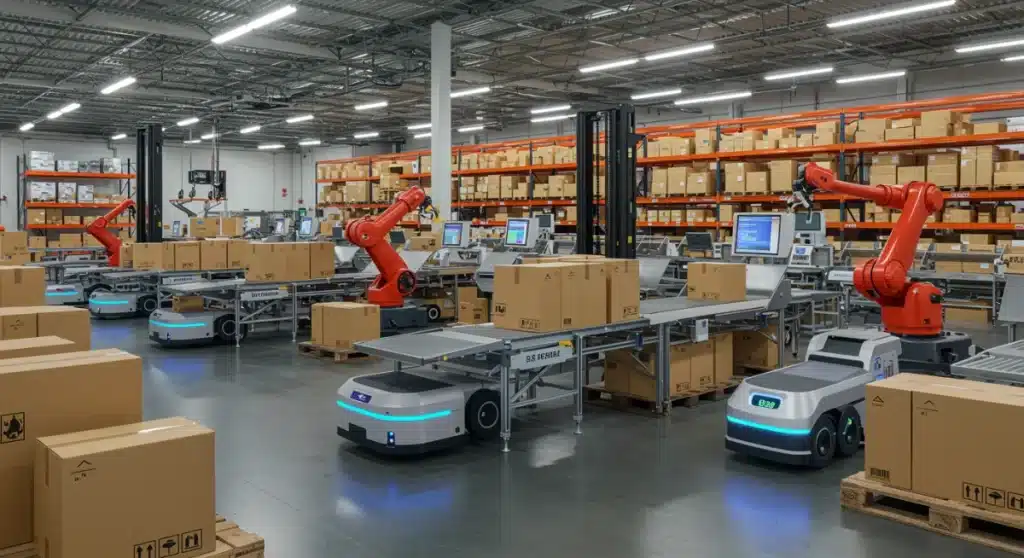
Robotics in warehousing refers to the deployment of automated systems and intelligent machines to perform various tasks within a warehouse or distribution center. These systems range from autonomous mobile robots (AMRs) that transport goods to robotic arms that pick and pack items, all designed to enhance efficiency, accuracy, and speed.
Unlike fixed automation systems of the past, modern warehouse robotics are often flexible and scalable, capable of adapting to changing demands and layouts. This adaptability is crucial for retailers who face fluctuating order volumes and product assortments. The integration of artificial intelligence and machine learning further empowers these robots to learn, optimize routes, and improve their performance over time.
Types of robots transforming warehouses
Several categories of robots are making significant inroads into warehouse operations, each addressing specific challenges and opportunities:
- Autonomous Mobile Robots (AMRs): These robots navigate warehouses independently, transporting shelves, pallets, or individual items. They dynamically adjust their routes to avoid obstacles and optimize flow.
- Automated Guided Vehicles (AGVs): Similar to AMRs but typically follow predefined paths, often used for repetitive, high-volume transport tasks.
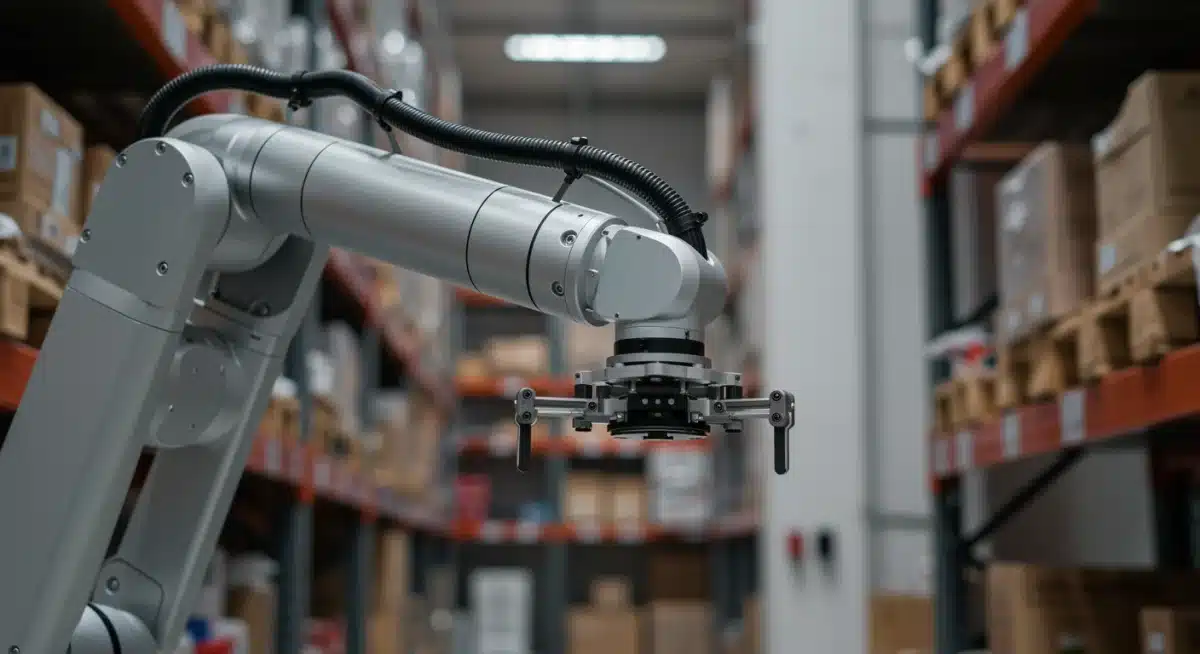
- Robotic Arms: Specialized for picking, packing, and sorting individual items with high precision and speed, often integrated with vision systems.
- Automated Storage and Retrieval Systems (AS/RS): Robotic systems that automatically store and retrieve items from high-density storage structures, maximizing space utilization.
These robotic solutions are not merely replacing human labor but are augmenting it, allowing human workers to focus on more complex tasks that require critical thinking, problem-solving, and customer interaction. This collaborative approach, often termed ‘cobotics,’ leverages the strengths of both humans and machines, leading to superior overall performance.
The evolution of robotics in warehousing is driven by continuous innovation in sensor technology, AI algorithms, and mechanical engineering. As these technologies mature, robots become more capable, cost-effective, and easier to integrate, making them an increasingly attractive solution for retailers of all sizes.
The impact on order fulfillment speeds
The direct impact of robotics in warehousing on order fulfillment speeds is profound and measurable. By automating labor-intensive and repetitive tasks, robots significantly reduce processing times, minimize errors, and allow for 24/7 operation without fatigue. This translates into quicker turnaround times from order placement to dispatch.
For US retailers, this means being able to process a higher volume of orders in less time, directly contributing to the projected 22% optimization in fulfillment speeds by 2025. This acceleration isn’t just about moving products faster; it’s about creating a more responsive and agile supply chain that can meet the demands of modern commerce.
Key areas of speed optimization
Robots enhance fulfillment speeds across several critical functions:
- Picking Efficiency: Robotic pickers can access items faster and more accurately than humans, especially in high-density storage areas, reducing pick times significantly.
- Sorting and Consolidation: Automated sorting systems can process thousands of items per hour, directing them to the correct packing stations or outbound lanes with precision.
- Transportation: AMRs and AGVs eliminate the need for human operators to move goods across vast warehouse floors, reducing travel time and improving throughput.
- Packing and Labeling: Robotic arms can quickly and consistently pack items into boxes and apply shipping labels, standardizing processes and reducing manual effort.
The cumulative effect of these optimizations is a streamlined workflow where bottlenecks are minimized, and goods flow continuously through the warehouse. This not only speeds up individual orders but also increases the overall capacity of the distribution center, allowing retailers to scale operations without proportional increases in labor costs.
Furthermore, the reduction in human error that robotics bring contributes to higher order accuracy, which in turn reduces the need for returns and re-shipping, indirectly speeding up the overall customer experience. This holistic improvement in efficiency and accuracy is a cornerstone of the projected gains in fulfillment speeds.
Addressing labor challenges with automation
One of the most significant drivers for the adoption of robotics in warehousing is the persistent and growing labor shortage in the logistics sector. Finding and retaining skilled warehouse workers has become increasingly difficult for US retailers, leading to higher labor costs, recruitment challenges, and operational inefficiencies.
Robotics offers a viable solution by automating tasks that are repetitive, physically demanding, or require high precision, thereby reducing reliance on manual labor for these specific roles. This doesn’t necessarily mean eliminating jobs but rather reallocating human talent to more strategic and value-added functions.
Transforming the warehouse workforce
Instead of replacing workers wholesale, robots enable a transformation of the warehouse workforce. Human employees can transition to roles that involve:
- Robot supervision and maintenance: Overseeing robotic operations, troubleshooting issues, and performing preventative maintenance.
- Data analysis and optimization: Utilizing insights from robotic systems to further improve warehouse layouts and workflows.
- Customer service and specialized tasks: Focusing on complex order exceptions, personalized packing, or direct customer interaction.
- Training and development: Upskilling and cross-training for new roles within an automated environment.
This shift often leads to a safer working environment, as robots can handle heavy lifting and navigate dangerous areas, reducing the risk of workplace injuries. It also allows retailers to manage peak seasons more effectively, as robotic systems can scale up operations without the need for extensive seasonal hiring and training.
The integration of robotics helps alleviate the pressure on existing staff, improving job satisfaction by removing monotonous tasks and allowing them to engage in more stimulating work. This dual benefit of addressing labor shortages while enhancing employee engagement makes robotics a compelling investment for the future of retail logistics.
Implementation strategies for US retailers
Successfully integrating robotics in warehousing requires careful planning and a strategic approach. It’s not simply about purchasing robots but about designing a comprehensive automation strategy that aligns with a retailer’s specific operational needs, growth projections, and existing infrastructure. US retailers must consider various factors, from initial investment to long-term scalability.
A phased implementation approach often proves most effective, allowing retailers to test and refine their robotic systems in specific areas before expanding across the entire operation. This minimizes disruption and allows for continuous learning and optimization throughout the deployment process.
Key considerations for successful integration
Retailers should focus on several crucial aspects when implementing robotics:
- Pilot Programs: Start with small-scale pilot projects to evaluate robot performance and integration with existing systems without disrupting full operations.
- Infrastructure Assessment: Evaluate current warehouse layout, shelving, and IT infrastructure to ensure compatibility and identify necessary upgrades.
- Workforce Training: Invest in training programs for employees to operate, maintain, and work alongside robotic systems effectively.
- Data Integration: Ensure seamless integration of robotic systems with Warehouse Management Systems (WMS) and other supply chain software for optimal data flow and decision-making.
The selection of the right robotic solutions is paramount. This involves a thorough analysis of product types, order profiles, throughput requirements, and the specific challenges faced by the warehouse. Partnering with experienced robotics providers can offer valuable insights and support throughout the entire implementation journey.
Furthermore, understanding the return on investment (ROI) is critical. While initial investments can be substantial, the long-term benefits in terms of increased efficiency, reduced labor costs, improved accuracy, and enhanced customer satisfaction typically justify the expenditure. Strategic implementation ensures these benefits are realized efficiently.
Future outlook: beyond 2025
The trajectory for robotics in warehousing extends far beyond the projected 22% optimization in order fulfillment speeds for US retailers by 2025. The coming years promise even more sophisticated and integrated robotic solutions, driven by advancements in artificial intelligence, machine learning, and sensor technology. We are on the cusp of truly intelligent warehouses that can adapt, learn, and optimize operations with minimal human intervention.
Future warehouses will likely feature a higher degree of interconnectedness, with robots, sensors, and WMS communicating in real-time to create a truly agile and responsive ecosystem. This will enable predictive maintenance, proactive problem-solving, and dynamic resource allocation, pushing efficiency levels to new heights.
Emerging trends and innovations
Several trends are set to shape the future of warehouse robotics:
- Swarm Robotics: Multiple smaller robots coordinating to perform complex tasks, offering greater flexibility and redundancy.
- AI-Powered Vision Systems: Enhanced computer vision allowing robots to identify, inspect, and handle a wider variety of items with greater accuracy.
- Human-Robot Collaboration (Cobots): More advanced collaborative robots designed to work seamlessly and safely alongside human workers, enhancing productivity without full automation.
- Sustainable Robotics: Development of energy-efficient robots and systems that contribute to greener warehouse operations, aligning with corporate sustainability goals.
The increasing sophistication of robotics will also lead to more specialized applications, with robots designed for specific tasks like handling fragile goods, managing cold storage, or processing hazardous materials. This specialization will further refine efficiency and safety across diverse retail environments.
Ultimately, the future of retail logistics will be defined by intelligent automation. Retailers who embrace these advancements will not only meet the escalating demands of consumers but will also establish resilient, cost-effective, and highly competitive supply chains capable of navigating future market complexities. The journey of robotics in warehousing is just beginning, promising a revolution in how goods are moved and delivered.
| Key Aspect | Brief Description |
|---|---|
| Fulfillment Speed Boost | Robotics are projected to optimize US retail order fulfillment speeds by 22% by 2025. |
| Addressing Labor Shortages | Automation helps mitigate the growing labor crunch in the logistics sector, reallocating human talent. |
| Enhanced Accuracy & Efficiency | Robots reduce errors in picking, sorting, and packing, leading to higher accuracy and operational efficiency. |
| Future Innovations | Beyond 2025, expect swarm robotics, advanced AI vision, and human-robot collaboration for further gains. |
Frequently asked questions about warehouse robotics
Robotics enhance fulfillment speed by automating repetitive tasks like picking, sorting, and transporting goods. Autonomous Mobile Robots (AMRs) move items faster, while robotic arms execute precise picking and packing, reducing human travel time and error rates, leading to quicker order processing and dispatch.
While robots automate certain tasks, they primarily augment human labor rather than completely replacing it. They take over physically demanding or monotonous jobs, allowing human workers to transition to roles focused on robot supervision, maintenance, data analysis, and more complex problem-solving tasks, often leading to safer environments.
The most common robots include Autonomous Mobile Robots (AMRs) for transporting goods, Automated Guided Vehicles (AGVs) for fixed-path transport, and robotic arms for precision picking and packing. Automated Storage and Retrieval Systems (AS/RS) are also prevalent for maximizing storage density and quick retrieval.
Key challenges include the initial capital investment, integrating new systems with existing Warehouse Management Systems (WMS), adapting warehouse infrastructure, and training the workforce for new roles. Careful planning, pilot programs, and strong vendor partnerships are crucial for overcoming these hurdles.
Beyond 2025, expect advancements like swarm robotics for collaborative tasks, more sophisticated AI-powered vision systems for improved accuracy, and enhanced human-robot collaboration (cobots). The focus will be on creating highly intelligent, adaptive, and sustainable warehouse ecosystems capable of greater autonomy.
Conclusion
The integration of robotics in warehousing is not merely a trend but a transformative necessity for US retailers. As consumer expectations for speed and efficiency continue to escalate, and labor challenges persist, automation provides a robust solution. By 2025, the projected 22% optimization in order fulfillment speeds will underscore the critical role these technologies play in shaping the competitive landscape of retail. Beyond the immediate gains, the continuous evolution of robotics promises a future of highly intelligent, resilient, and agile supply chains, ensuring that retailers can meet, and even exceed, the demands of a dynamic global market.