Sustainable E-commerce: 2025 Consumer Demands & New Trends
The evolving landscape of e-commerce is being fundamentally reshaped by increasing consumer demands for sustainability, particularly in shipping and packaging, driving significant innovation and strategic shifts for businesses by 2025.
The world of online retail is in constant flux, but few forces are as transformative as the rising tide of consumer demand for sustainability. By 2025, this isn’t just a niche preference; it’s a mainstream expectation that is profoundly influencing how products are shipped and packaged. Sustainable e-commerce trends are no longer optional but essential for businesses aiming to thrive in an environmentally conscious market.
The growing pressure of conscious consumerism
Consumers are becoming increasingly aware of the environmental footprint of their purchases, and this scrutiny extends far beyond the product itself to encompass the entire supply chain. This shift is not merely a passing fad; it represents a fundamental change in purchasing values, with a significant portion of buyers actively seeking out brands that demonstrate genuine commitment to ecological responsibility.
This heightened awareness translates into tangible actions. Shoppers are more likely to support businesses that prioritize sustainable practices, even if it means paying a slight premium or waiting a little longer for delivery. The digital age has also empowered consumers with more information, allowing them to research brand ethics and supply chain transparency with unprecedented ease. Social media platforms amplify these discussions, creating a powerful feedback loop that holds companies accountable.
Understanding the new buyer’s mindset
- Values-driven purchasing: Decisions are influenced by ethical considerations, not just price or convenience.
- Transparency imperative: Consumers demand clear communication about sourcing, production, and environmental impact.
- Waste reduction focus: A strong preference for minimal and eco-friendly packaging.
The implications for e-commerce are profound. Companies that fail to adapt risk alienating a growing segment of their customer base, while those that embrace sustainability early on can build stronger brand loyalty and carve out a competitive advantage. This consumer-driven shift is compelling businesses to rethink every aspect of their operations, from material sourcing to last-mile delivery.
Innovations in eco-friendly packaging materials
The quest for sustainable e-commerce begins, for many, with packaging. Traditional packaging materials like single-use plastics and excessive cardboard contribute significantly to waste and pollution. However, a wave of innovation is introducing viable and often superior alternatives that meet both environmental and logistical needs. This evolution is crucial for reducing ecological impact.
From biodegradable plastics derived from plant starches to mushroom-based composites that offer remarkable protective qualities, the options are expanding rapidly. Companies are also exploring ways to use recycled content more effectively, not just in secondary packaging but also in primary product containers. The goal is to create packaging that is either reusable, recyclable, compostable, or made from renewable resources.
Key advancements in packaging innovation
- Compostable polymers: Materials that break down into natural elements, leaving no toxic residue.
- Recycled content maximization: Utilizing post-consumer and post-industrial waste in packaging.
- Bio-based alternatives: Packaging derived from agricultural byproducts, seaweed, or fungi.
- Minimalist design: Reducing overall material usage while maintaining product safety.
These new materials not only address environmental concerns but also present opportunities for brands to tell a compelling sustainability story. Packaging can become a tactile representation of a company’s values, enhancing the unboxing experience while aligning with consumer expectations for eco-conscious choices. The challenge lies in scaling these innovations and making them cost-effective for widespread adoption across the e-commerce sector.
The rise of green shipping and logistics
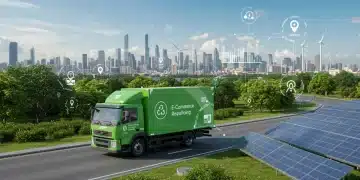
Beyond packaging, the transportation of goods represents a significant area for environmental improvement in sustainable e-commerce. Green shipping and logistics are rapidly gaining traction as businesses seek to minimize their carbon footprint from warehouse to doorstep. This involves a multi-faceted approach, integrating technology, strategic planning, and alternative energy sources to optimize delivery routes and modes.
The adoption of electric vehicles for last-mile delivery, the optimization of warehouse energy consumption, and the consolidation of shipments to reduce empty space are just a few examples of current initiatives. Furthermore, companies are investing in more efficient routing software and exploring partnerships with logistics providers that offer carbon-neutral shipping options. The aim is to create a more streamlined and environmentally responsible supply chain.

Strategies for sustainable delivery
- Route optimization: Using algorithms to minimize travel distance and fuel consumption.
- Electric vehicle fleets: Transitioning to EVs for urban and last-mile deliveries.
- Consolidated shipping: Reducing the number of packages and trips.
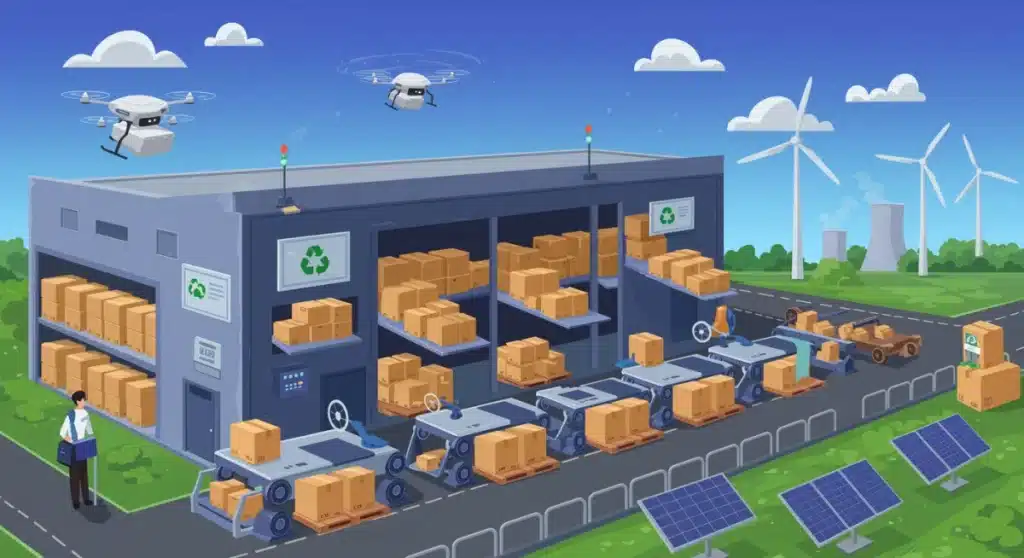
- Renewable energy in logistics: Powering warehouses and distribution centers with solar or wind energy.
The shift towards greener logistics is not without its challenges, including infrastructure development for EV charging and the initial investment in new technologies. However, the long-term benefits, including reduced operational costs, enhanced brand reputation, and compliance with evolving environmental regulations, make it a crucial area of focus for e-commerce businesses.
Circular economy principles in e-commerce
The concept of a circular economy, which emphasizes reducing waste and maximizing resource utility, is gaining significant traction within sustainable e-commerce. Instead of the traditional linear model of ‘take, make, dispose,’ businesses are now exploring ways to design products and processes that keep materials in use for as long as possible. This paradigm shift offers immense potential for environmental and economic benefits.
For e-commerce, this means looking at product lifecycles, encouraging repair and refurbishment, and establishing robust return and recycling programs. It also involves designing packaging that can be easily returned and reused, or that is made from materials that can be endlessly recycled. The goal is to move towards a system where waste is minimized, and resources are continually re-integrated into the economy.
Implementing circular strategies
- Product-as-a-service models: Offering products for rent or lease rather than outright purchase.
- Take-back programs: Companies collecting used products for recycling or refurbishment.
- Reusable packaging systems: Developing closed-loop systems for packaging return and reuse.
- Waste reduction at source: Designing products with longevity and recyclability in mind.
Embracing circular economy principles requires a fundamental re-evaluation of business models and supply chains. It often involves collaboration with customers, suppliers, and even competitors to create effective closed-loop systems. While complex, the move towards circularity is seen as a key component of truly sustainable e-commerce, offering a path to long-term resilience and resource efficiency.
Technology’s role in driving sustainability
Technology is an indispensable ally in the pursuit of sustainable e-commerce. From artificial intelligence and machine learning to blockchain and IoT, these tools are providing unprecedented opportunities to optimize operations, enhance transparency, and reduce environmental impact across the entire value chain. Their application is making green initiatives more efficient and measurable.
AI, for instance, can predict demand more accurately, reducing overproduction and waste, while also optimizing delivery routes to minimize fuel consumption. Blockchain technology offers a secure and transparent way to track products from origin to consumer, verifying ethical sourcing and sustainable production practices. IoT sensors can monitor environmental conditions in warehouses and during transit, ensuring product integrity and preventing spoilage.
Technological enablers for green e-commerce
- AI-driven demand forecasting: Minimizing inventory waste and optimizing production.
- Blockchain for supply chain transparency: Verifying ethical sourcing and carbon footprint.
- IoT for smart logistics: Real-time tracking and condition monitoring to reduce waste.
- Big data analytics: Identifying inefficiencies and areas for environmental improvement.
These technological advancements are not merely about efficiency; they are about enabling a new level of accountability and informed decision-making. By leveraging data and automation, e-commerce businesses can identify key areas for improvement, track their progress towards sustainability goals, and communicate their efforts transparently to a discerning consumer base. This integration of tech is vital for future success.
Overcoming challenges and looking ahead
While the momentum towards sustainable e-commerce is undeniable, businesses face several challenges in fully integrating these practices. Initial investment costs for new infrastructure, materials, and technologies can be substantial. There’s also the complexity of reconfiguring existing supply chains, which often involves multiple partners and global operations. Consumer education also plays a role, as not all customers are yet fully aware of the benefits or nuances of sustainable practices.
Despite these hurdles, the long-term benefits—including enhanced brand reputation, increased customer loyalty, potential cost savings from efficiency gains, and compliance with evolving regulations—make the transition imperative. Forward-thinking companies are viewing sustainability not as a cost center but as a strategic investment that will define their competitiveness in the years to come. Collaboration across industries and governmental support will also be crucial in accelerating this shift.
The future of e-commerce is green, and businesses that proactively adapt to these demands will be the ones that thrive. The journey requires continuous innovation, a commitment to transparency, and a willingness to rethink traditional models. As 2025 approaches, the pressure to act sustainably will only intensify, making it a defining characteristic of successful online enterprises.
| Key Point | Brief Description |
|---|---|
| Consumer Demand | Increasing pressure for eco-friendly practices drives e-commerce innovation. |
| Packaging Innovation | Shift to compostable, recycled, and bio-based materials. |
| Green Logistics | Adoption of EVs, route optimization, and consolidated shipping. |
| Circular Economy | Embracing reuse, repair, and recycling to minimize waste. |
Frequently asked questions about sustainable e-commerce
The primary drivers are escalating consumer demand for eco-friendly products and practices, increasing environmental regulations, and the growing recognition by businesses of the long-term benefits of sustainability, including cost savings and enhanced brand reputation. Transparency and ethical sourcing are also crucial factors.
Packaging is shifting towards materials that are compostable, made from high percentages of recycled content, or derived from bio-based sources like plant starches or fungi. There’s also a strong emphasis on minimalist design to reduce overall material use and promote reusability in packaging systems.
Green shipping aims to minimize the carbon footprint of logistics through route optimization, the adoption of electric delivery vehicles, consolidated shipments, and the use of renewable energy in warehouses. These efforts reduce fuel consumption, emissions, and overall environmental impact, meeting consumer expectations for eco-conscious delivery.
Absolutely. Technology is pivotal. AI helps optimize demand forecasting and delivery routes, reducing waste and emissions. Blockchain enhances supply chain transparency, verifying sustainable sourcing. IoT sensors monitor conditions to prevent spoilage. These tools enable businesses to make data-driven decisions for greater environmental responsibility and efficiency.
Challenges include significant upfront investment costs for new sustainable materials and technologies, the complexity of redesigning global supply chains, and the need for consumer education on the benefits and proper disposal of eco-friendly packaging. Overcoming these requires strategic planning and a long-term commitment to sustainability.
Conclusion
The trajectory of e-commerce is undeniably set towards sustainability, driven by an increasingly informed and demanding consumer base. By 2025, businesses that fail to integrate eco-friendly shipping, packaging, and broader circular economy principles risk falling behind. The innovations in materials and logistics, coupled with the power of technology, offer clear pathways for companies to meet these expectations. While challenges exist, the imperative for environmental responsibility presents not just a compliance issue, but a significant opportunity for growth, innovation, and stronger customer relationships in the evolving digital marketplace.