Zelle vs. Venmo: Shaping the 2025 US P2P Payments Market
The US P2P payment market is undergoing significant transformation, with Zelle and Venmo emerging as dominant forces, each leveraging unique strengths to capture user loyalty and redefine digital money transfers by 2025.
The landscape of personal finance has been dramatically reshaped by peer-to-peer (P2P) payment platforms. As we approach 2025, the competition between major players like Zelle and Venmo intensifies, fundamentally altering how Americans send and receive money. Understanding the nuances of Zelle Venmo P2P Payments is crucial for anyone navigating the modern financial ecosystem.
The Rise of P2P Payments in the United States
The rapid adoption of smartphones and digital banking has fueled an explosive growth in P2P payment solutions across the United States. What was once a niche offering has become a ubiquitous tool, simplifying everything from splitting dinner bills to sending money to family members across the country. This shift represents more than just convenience; it signifies a fundamental change in financial behavior.
The journey from cash and checks to instant digital transfers has been swift, driven by consumer demand for speed, ease, and accessibility. Early platforms laid the groundwork, but it’s the current generation of P2P apps that have truly embedded themselves into daily life, setting the stage for future financial innovations.
Driving Factors for P2P Growth
- Smartphone Penetration: Nearly universal smartphone ownership provides the primary access point for these services.
- Digital Banking Integration: Seamless connections with bank accounts facilitate quick and secure transactions.
- Social Acceptance: P2P payments have become a socially accepted norm, especially among younger demographics.
- Convenience and Speed: The ability to send money instantly, without physical cash, is a major draw.
The evolution of P2P payments is a testament to technological advancement meeting consumer need. As traditional banking systems adapt, these digital solutions continue to push the boundaries of what’s possible in personal finance, making money management more fluid and interconnected than ever before. This ongoing transformation is not just about technology; it’s about redefining financial interactions.
Zelle: Bank-Backed Speed and Security
Zelle has carved out a significant niche in the P2P market by leveraging its strong ties to traditional banking institutions. Unlike some independent apps, Zelle is integrated directly into the mobile banking applications of hundreds of financial institutions across the US. This integration offers a unique value proposition: unparalleled speed and a perception of enhanced security, as transactions occur within familiar banking environments.
The platform’s design prioritizes direct bank-to-bank transfers, often completing transactions in minutes. This speed is a key differentiator, particularly for users who value immediate access to funds. Its widespread availability through existing bank apps means many users don’t need to download a separate application, streamlining the adoption process.
Key Advantages of Zelle
- Instant Transfers: Money typically moves directly from one bank account to another within minutes.
- Broad Bank Network: Available through a vast network of US banks and credit unions, making it accessible to millions.
- No Separate App Needed: For many users, Zelle is already integrated into their existing mobile banking app.
- High Security Standards: Benefits from the robust security protocols of participating financial institutions.
While Zelle’s direct integration offers significant benefits, it also means that transactions are generally more formal and less social than some competitors. It is often preferred for sending money to trusted contacts, reflecting its emphasis on security and direct financial utility rather than social engagement. This positioning has allowed Zelle to capture a substantial share of the market, particularly for larger, more critical transfers.
Venmo: The Social Side of Money Transfers
Venmo, a subsidiary of PayPal, has redefined P2P payments by infusing a strong social element into financial transactions. More than just a money transfer app, Venmo functions as a social network where users can share transaction details with friends, complete with emojis and comments. This social feed creates a unique and engaging user experience that has resonated particularly well with younger demographics.
The platform’s ease of use and informal atmosphere make it ideal for splitting everyday expenses, from rent and utilities to concert tickets and meals. Venmo also offers a debit card, direct deposit, and business profiles, expanding its utility beyond simple P2P transfers and integrating it further into users’ financial lives.
Venmo’s Distinctive Features
- Social Feed: Public or private sharing of transactions adds a unique social dimension.
- User-Friendly Interface: Intuitive design makes sending and receiving money straightforward and enjoyable.
- Diverse Functionality: Offers a debit card, business profiles, and cryptocurrency purchasing options.
- Purchase Protection: Provides buyer and seller protection for eligible transactions, enhancing trust.
Venmo’s success lies in its ability to blend financial utility with social interaction, making money transfers feel less like a chore and more like a seamless part of daily life. This approach has fostered a loyal user base that values both the convenience of digital payments and the community aspect of sharing experiences. Its evolution reflects a broader trend towards integrating financial services into lifestyle platforms.
Comparative Analysis: Zelle vs. Venmo for 2025
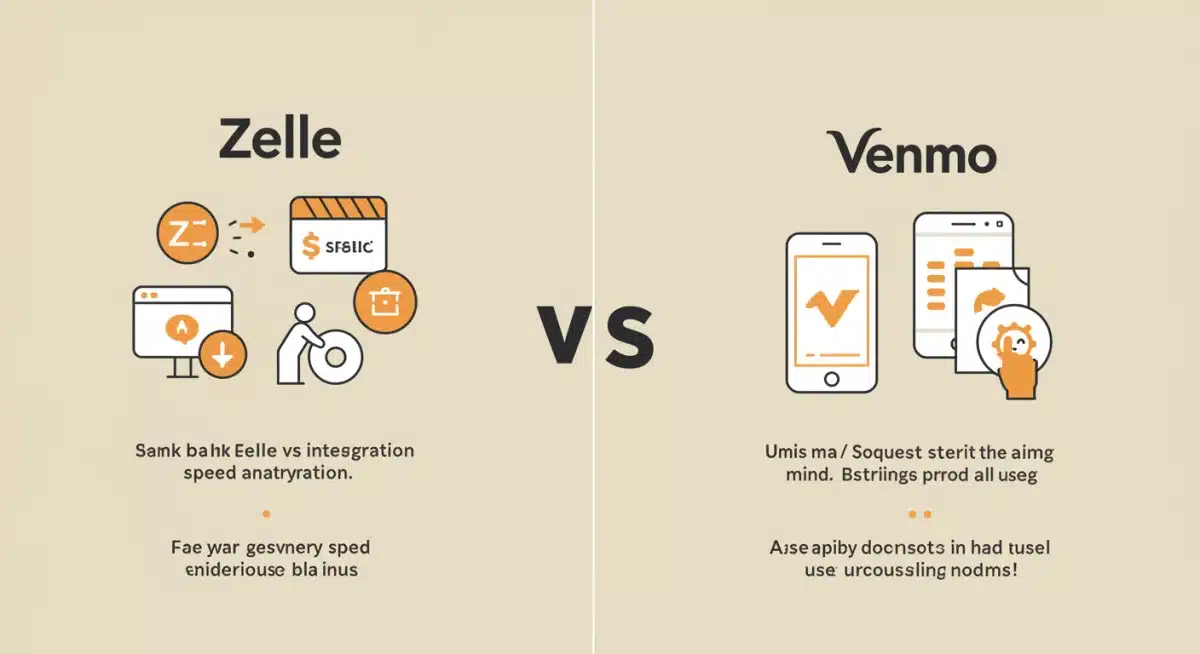
When comparing Zelle and Venmo, it’s clear they cater to distinct, though sometimes overlapping, user needs. Zelle’s strength lies in its direct integration with traditional banking and its focus on fast, secure, bank-to-bank transfers. This makes it a preferred choice for larger sums or when absolute speed and directness are paramount, often bypassing the need for a separate app download.
Venmo, on the other hand, thrives on its social features and a more flexible, digital wallet-centric approach. Its appeal is strongest among those who frequently split costs with friends, appreciate the social feed, or utilize its additional features like the debit card. The choice between them often comes down to individual priorities: speed and direct bank access versus social interaction and a digital wallet ecosystem.
Both platforms are continuously evolving, adding new features and enhancing security. Zelle is exploring ways to expand its reach beyond direct bank apps, while Venmo is integrating more financial services like crypto and business tools. The competitive landscape for 2025 will likely see both platforms continuing to innovate, striving to offer comprehensive solutions while maintaining their core strengths.
Security and User Protection: A Critical Examination
Security is paramount in the P2P payment space, and both Zelle and Venmo employ robust measures to protect user funds and data. However, their approaches and specific vulnerabilities can differ. Zelle, being directly integrated with banks, benefits from the extensive security infrastructure already in place at financial institutions. This includes sophisticated fraud detection systems and compliance with banking regulations.
Venmo also implements strong security protocols, including encryption, fraud monitoring, and multi-factor authentication. However, its social nature can sometimes lead to user errors, such as sending money to the wrong person, which can be difficult to reverse. Both platforms continuously educate users on best practices, emphasizing the importance of sending money only to trusted individuals.
Understanding Security Measures
- Encryption: Both platforms use advanced encryption to protect data during transmission and storage.
- Fraud Monitoring: Automated systems actively monitor for suspicious activity and potential fraud.
- Authentication: Multi-factor authentication (MFA) adds an extra layer of security for user accounts.
- User Education: Both emphasize user responsibility in verifying recipients and protecting account credentials.
Despite these safeguards, users must remain vigilant. The instant nature of P2P transactions means that once money is sent, especially to an unintended recipient or as part of a scam, recovery can be challenging. Understanding the specific security features and limitations of each platform is crucial for safe and confident use in the evolving digital payment landscape.
The Future Landscape of P2P Payments Beyond 2025
Looking beyond 2025, the P2P payment market is poised for continued innovation and expansion. We can expect to see further integration of P2P functionalities into broader financial ecosystems, blurring the lines between traditional banking, digital wallets, and even e-commerce. The competition between Zelle and Venmo will undoubtedly drive many of these advancements, pushing both to offer more comprehensive and seamless user experiences.
Emerging technologies like blockchain and artificial intelligence could also play a significant role, enhancing security, speed, and personalization. The focus will likely shift towards greater interoperability between different platforms and financial institutions, making digital money transfers even more frictionless. The user experience will become increasingly central, with platforms competing on convenience, added value, and how well they anticipate consumer needs.
Projected Trends and Innovations
- API-First Development: Greater integration with third-party apps and services for enhanced functionality.
- AI-Powered Security: More sophisticated fraud detection and prevention mechanisms.
- Cross-Border Payments: Expansion into international P2P transfers, reducing friction and costs.
- Personalized Financial Management: Integration with budgeting tools and personalized financial advice.
The future of P2P payments is dynamic, promising a financial landscape where digital transactions are not just efficient but also intelligent and deeply integrated into our daily lives. Zelle and Venmo, with their distinct strategies and market positions, are well-placed to continue shaping this future, adapting to new technologies and evolving consumer expectations.
| Key Feature | Description |
|---|---|
| Zelle Integration | Directly integrated into US bank apps for instant, secure transfers. |
| Venmo Social Aspect | Offers a social feed for transactions, popular for splitting costs among friends. |
| Security Focus | Both use encryption and fraud monitoring; Zelle benefits from bank security. |
| Market Trajectory | Continued innovation expected, with focus on speed, integration, and user experience. |
Frequently Asked Questions About P2P Payments
Zelle facilitates direct, instant bank-to-bank transfers, often integrated within banking apps, prioritizing speed and security. Venmo operates as a digital wallet with social features, popular for splitting costs among friends, and offers additional services like debit cards and crypto.
Zelle is often perceived as safer for larger transactions due to its direct integration with established banking security protocols and regulatory compliance. Venmo also has strong security, but its digital wallet nature might involve different risk considerations for very high-value transfers.
Currently, both Zelle and Venmo are primarily designed for domestic P2P payments within the United States. They do not widely support international transfers. Users looking to send money abroad typically need to use alternative services specializing in cross-border transactions.
Zelle typically does not charge fees for standard transactions, though some banks might impose their own fees. Venmo also offers free standard transfers, but charges a fee for instant transfers to a bank account or for credit card-funded payments.
By 2025, P2P payments are expected to see greater integration with broader financial services, enhanced AI-driven security, and potential expansion into cross-border transactions. The focus will remain on user experience, speed, and seamless integration into daily financial management.
Conclusion
The evolution of P2P payments, prominently shaped by Zelle and Venmo, reflects a profound shift in how financial interactions occur in the United States. While Zelle champions bank-backed speed and security for direct transfers, Venmo excels with its social integration and flexible digital wallet features. Both platforms are indispensable in the modern financial toolkit, each addressing distinct user preferences and contributing to a dynamic and competitive market. As we advance towards 2025 and beyond, continuous innovation, enhanced security, and a relentless focus on user experience will define the next chapter of digital money transfers, further embedding these services into the fabric of daily life.